
Olympic National Park - October 2026
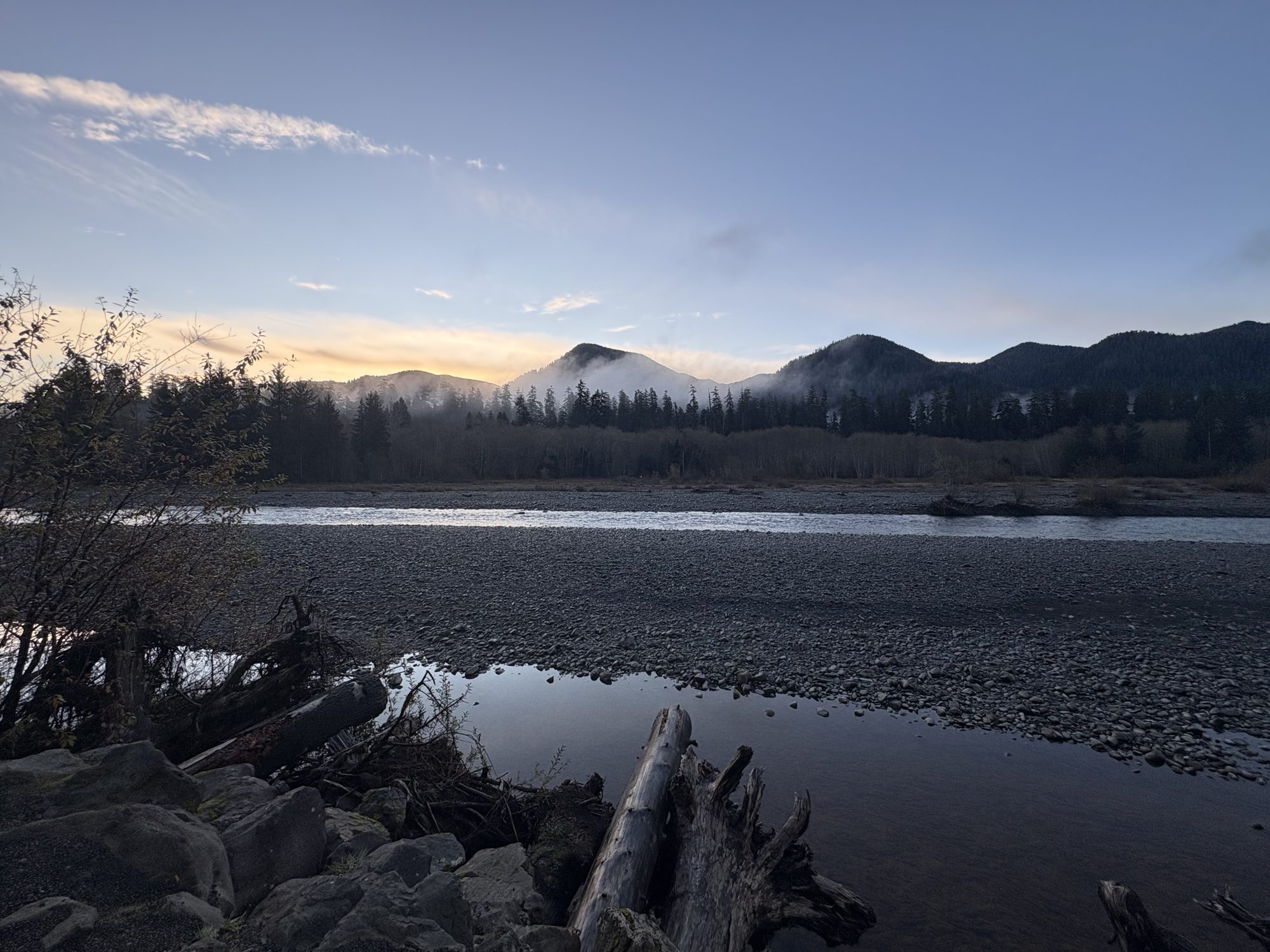 Two nights, one rental Camry, and roughly 500 miles around the top of the Olympic Peninsula.
The Plan
This was another work trip that grew a park on the end of it. A conference in Seattle ran through Thursday afternoon, and I wanted to check one Washington national park off the list before flying out.
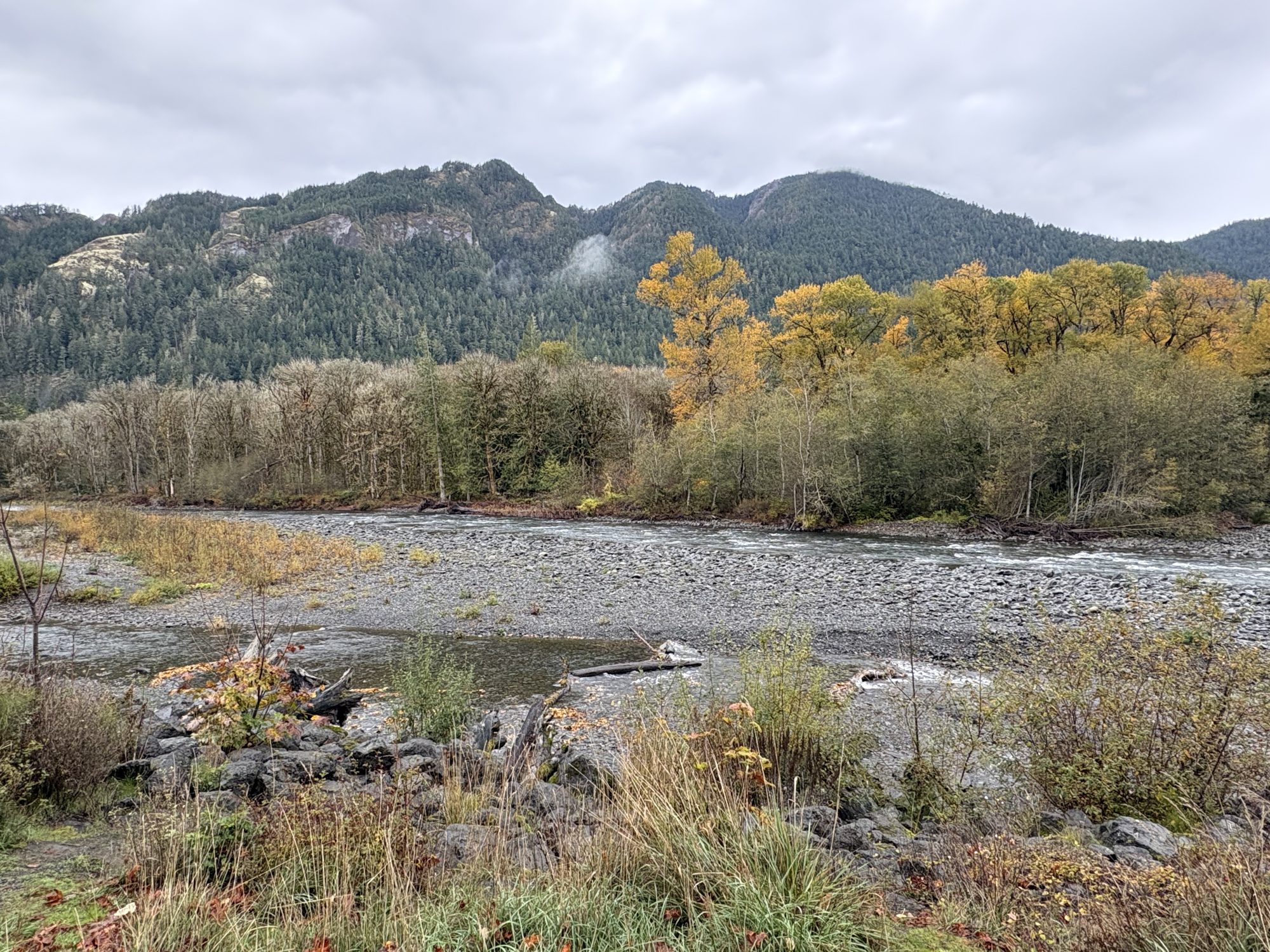
Late October narrowed the choice quickly. Rainier’s Sunrise road was already closed, and the North Cascades are an alpine park that is mostly snowed in by then. Olympic is the one park in the state that gets better in the rain: the rainforests are at their greenest, the bigleaf maples turn gold, coho are running up the rivers, and the coast is all storm light and sea stacks.
The Route
- 3 days
- ~500 miles
- 12 stops
- 2 passport stamps
Thursday: Sea-Tac to Port Angeles
Picked up the car at Sea-Tac at 4 PM and joined everyone else in Seattle on I-5 South. The route skips the ferries entirely: over the Tacoma Narrows Bridge, up through Kitsap, and across the Hood Canal Bridge onto US-101.
We stopped in Poulsbo, the little Norwegian town on Liberty Bay, right at sunset. It was drizzling and the waterfront park was closed, which felt like a fair introduction to the Olympic Peninsula in late October. Then on to Port Angeles for dinner and a bed.
Friday: Plan B, Then the Coast
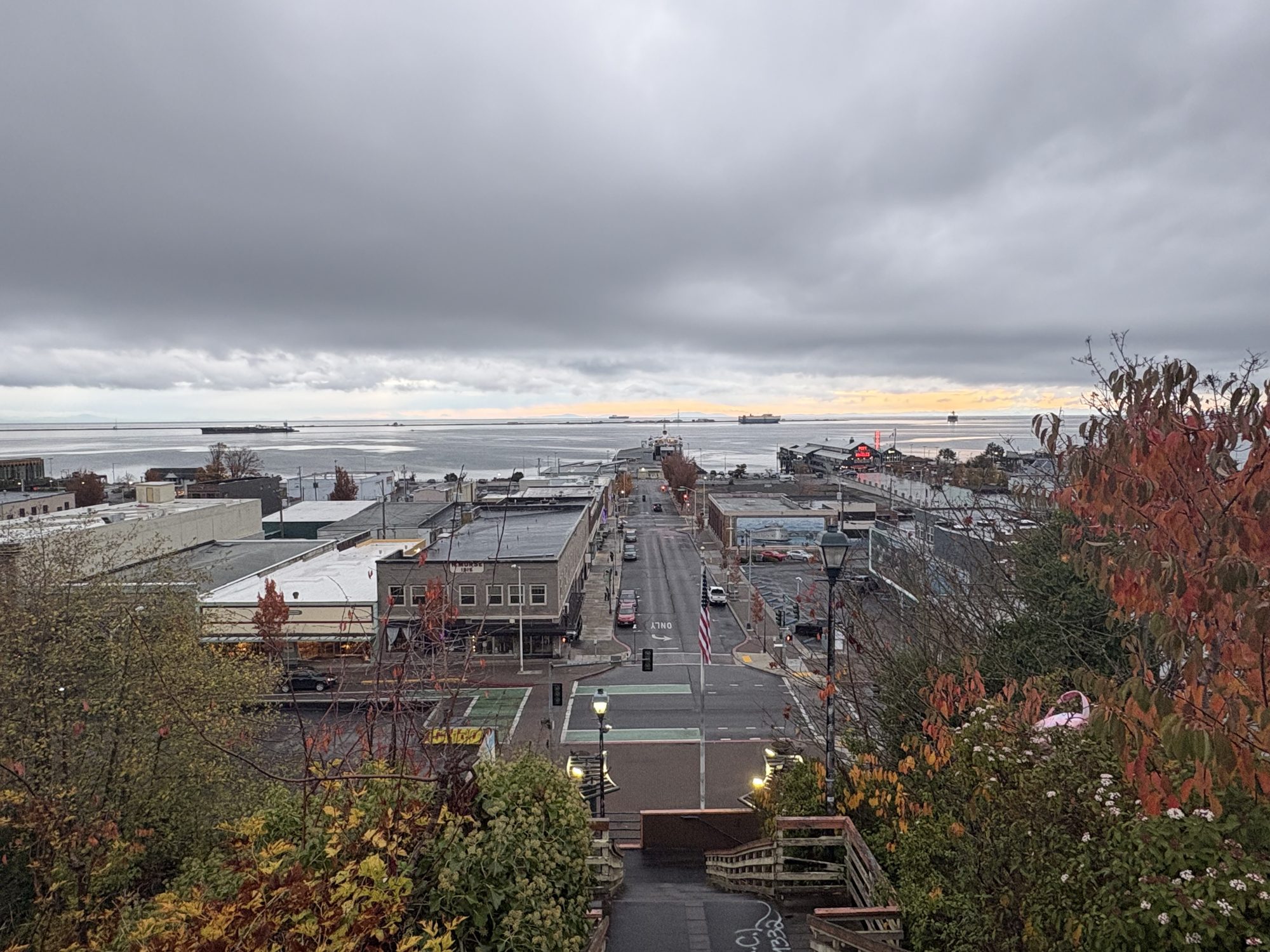
Hurricane Ridge Road was closed for snow, so the alpine morning turned into a lowland one:
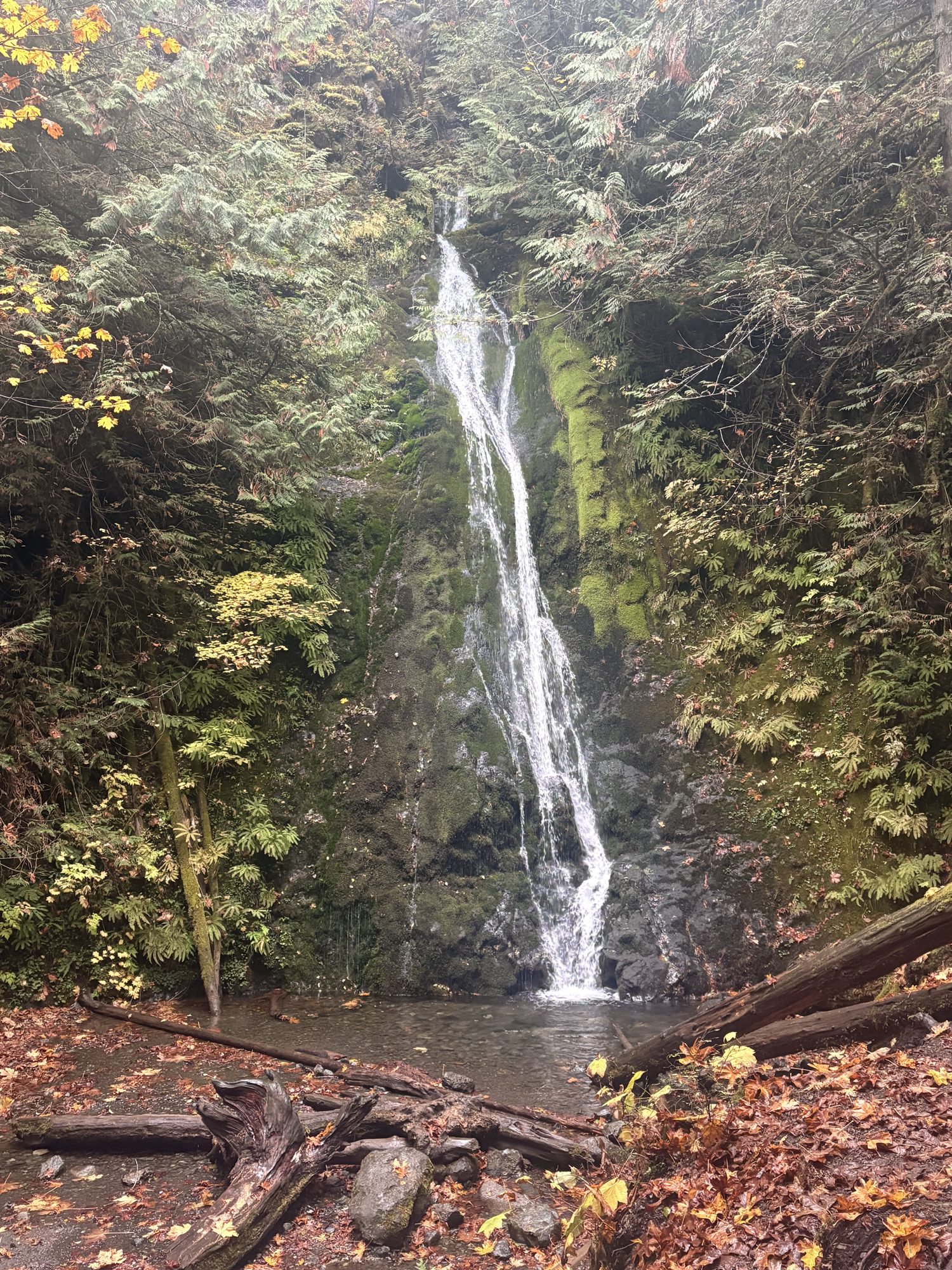
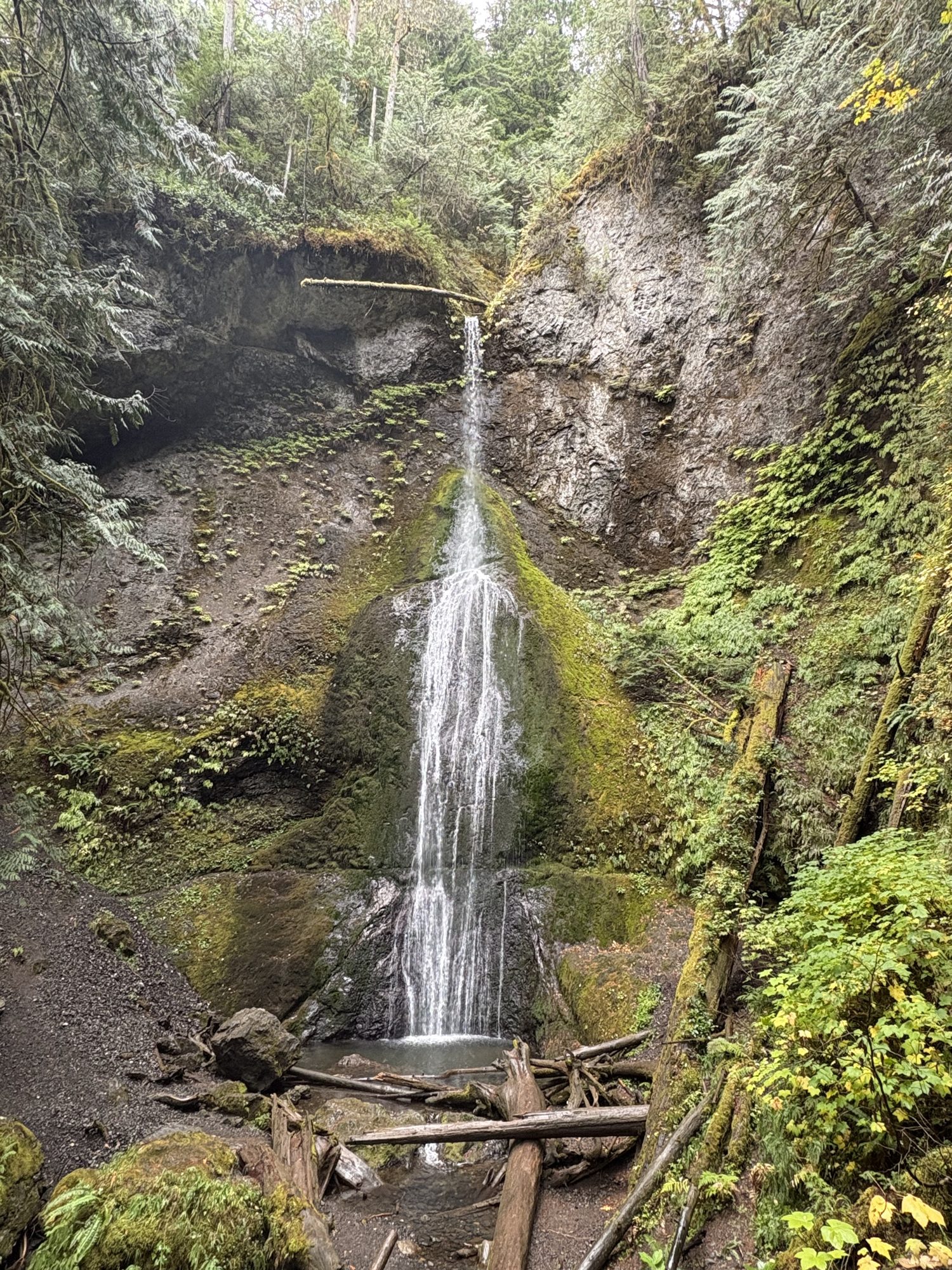
- Madison Falls in the Elwha Valley. The road beyond it is still washed out, so the falls are where the drive ends.
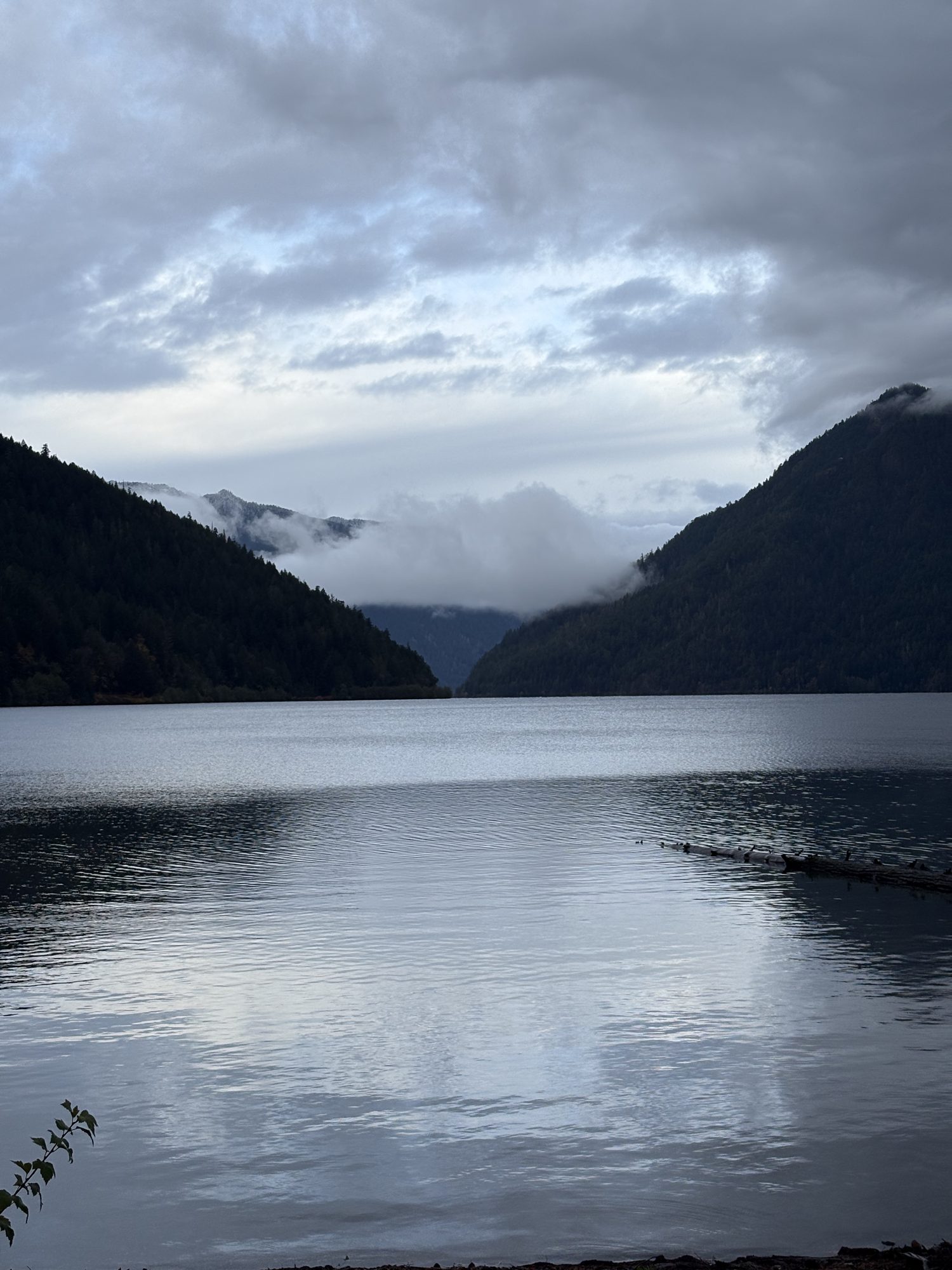
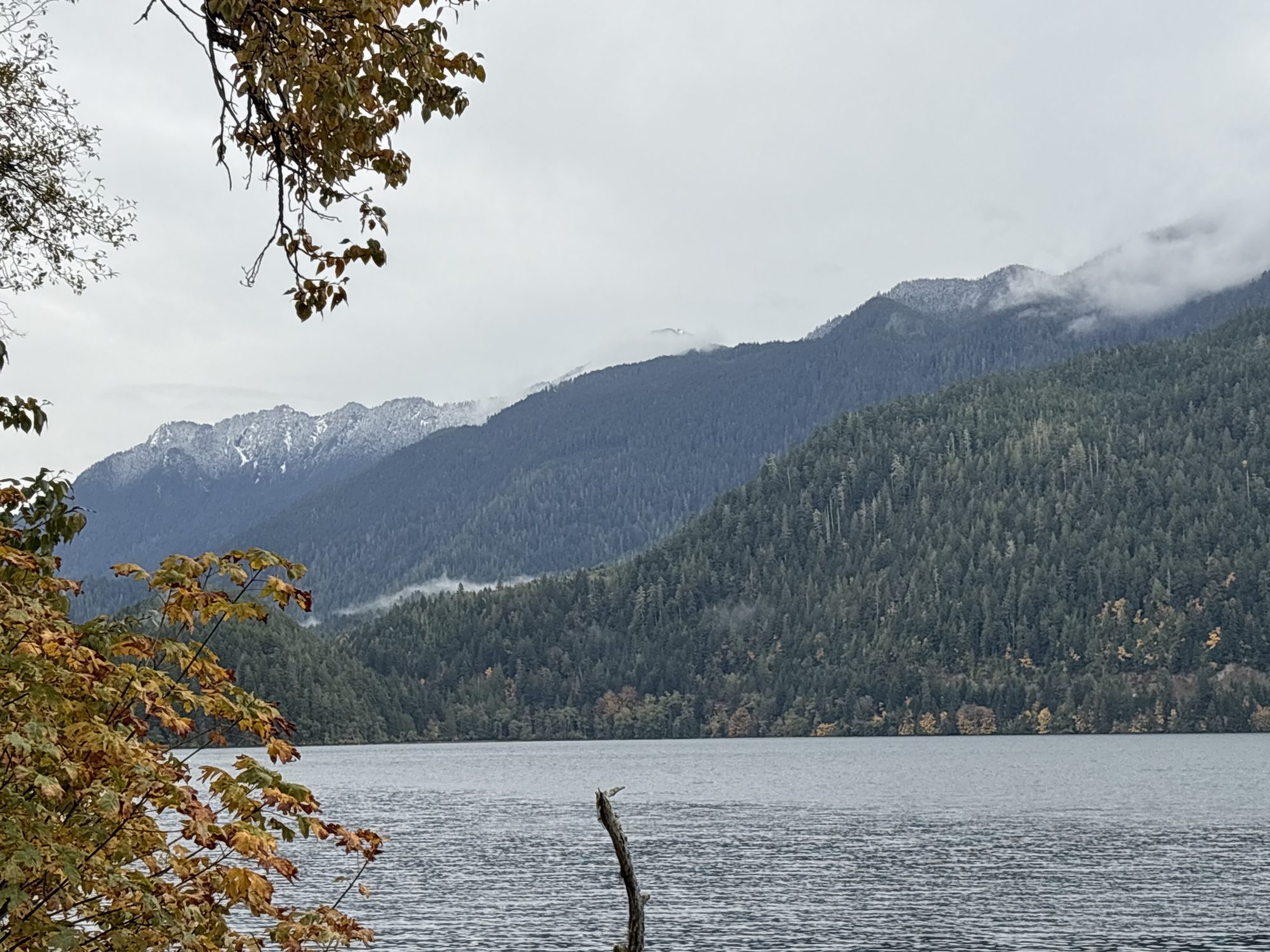
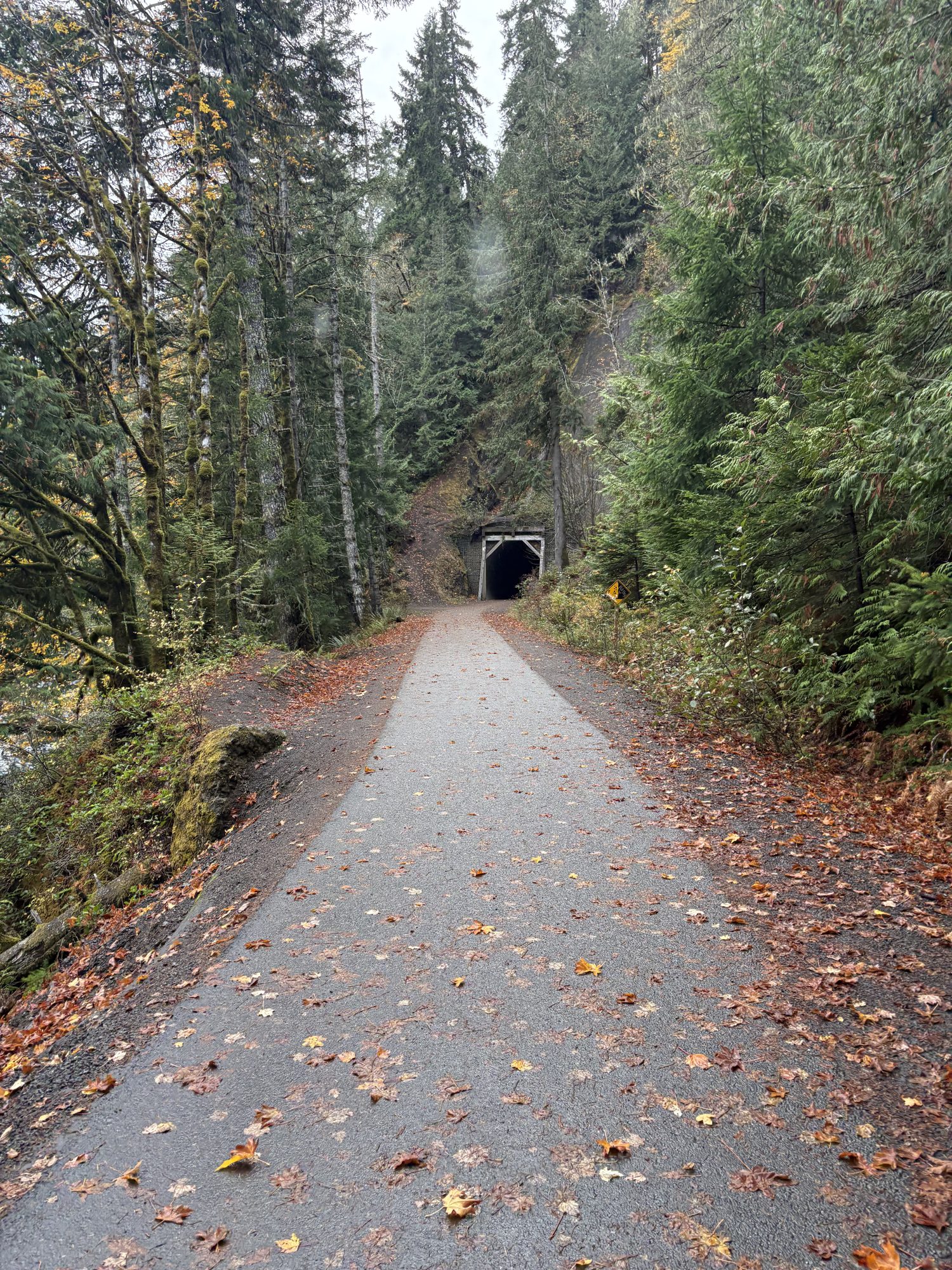
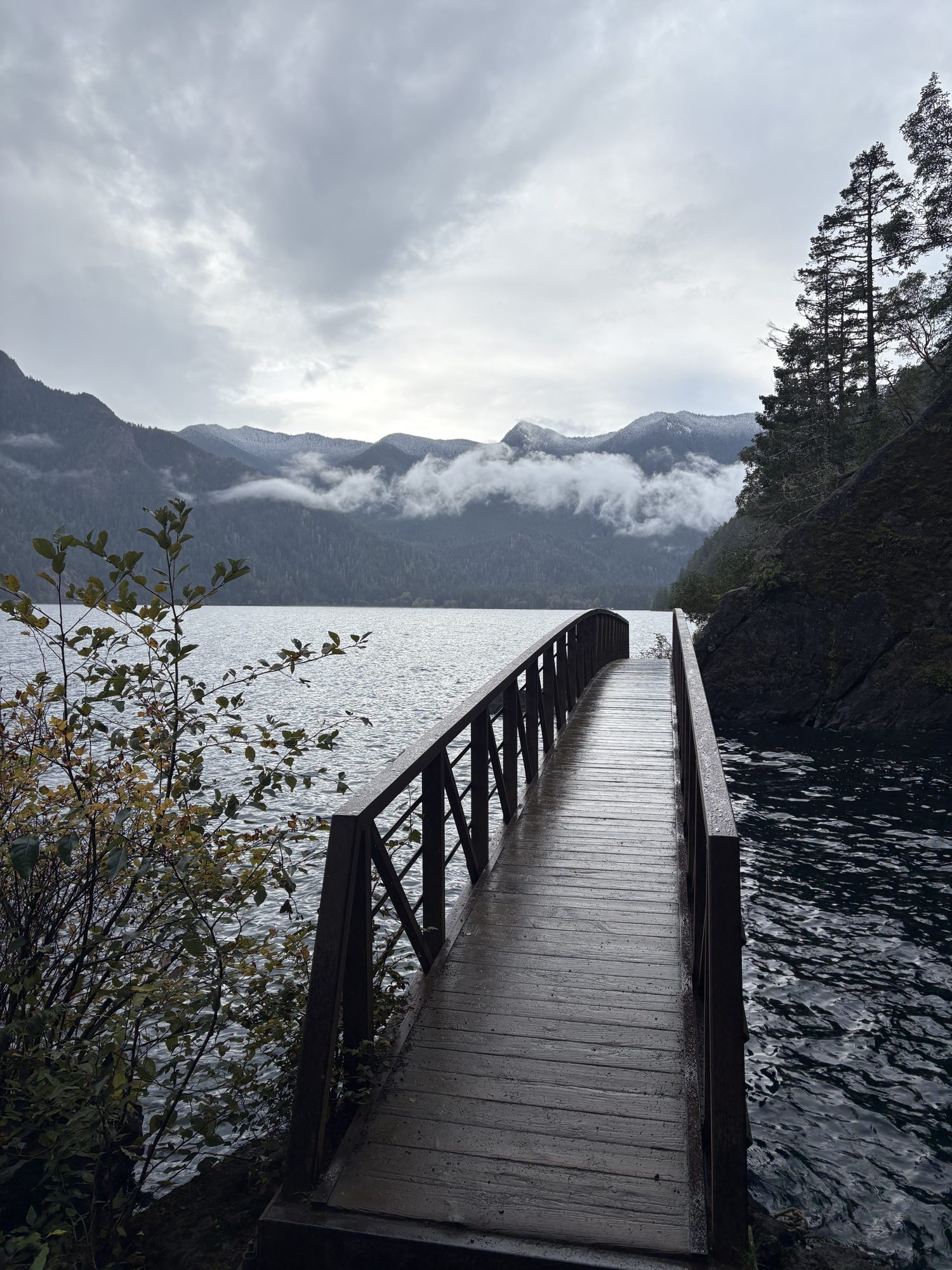
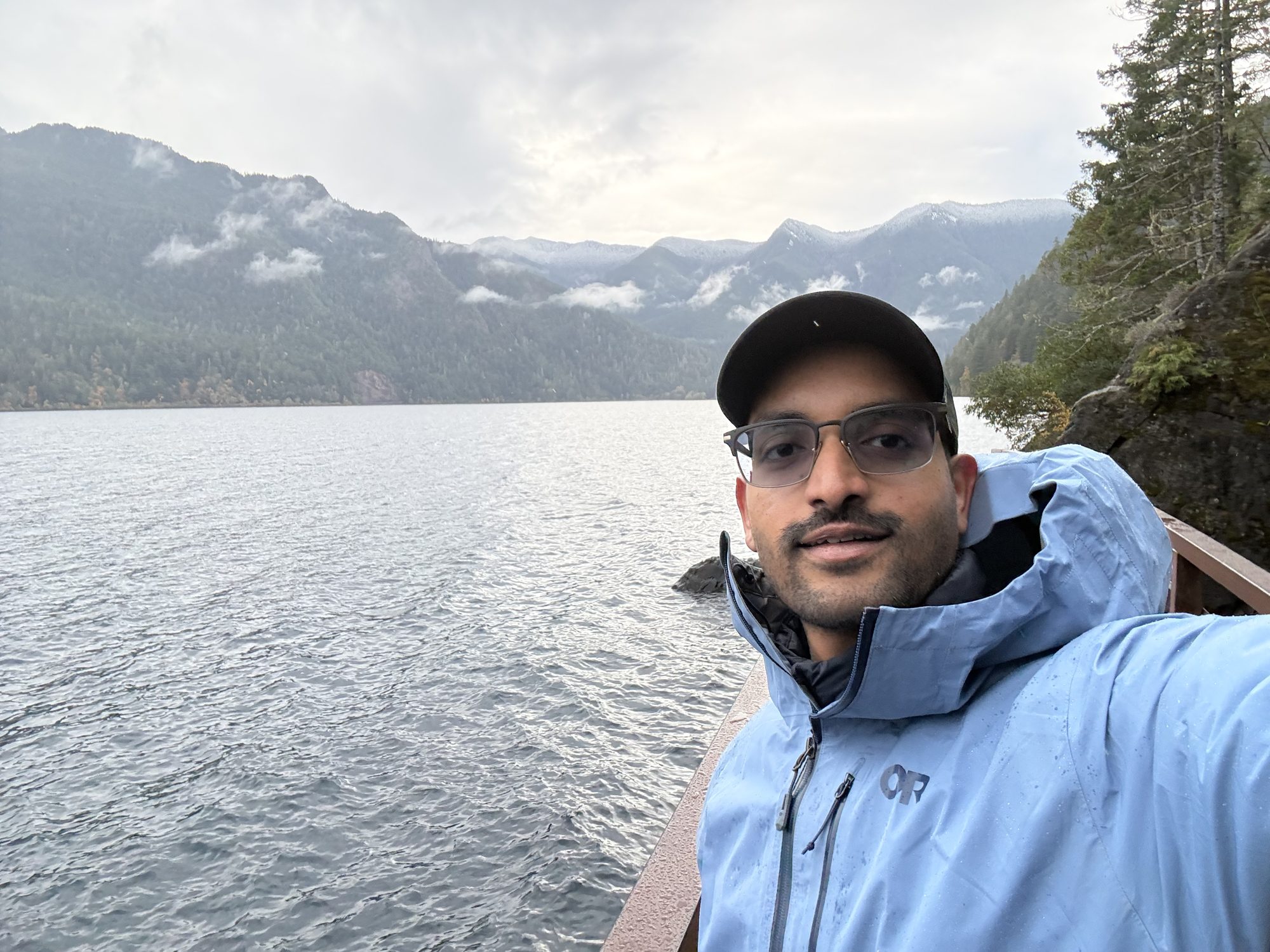
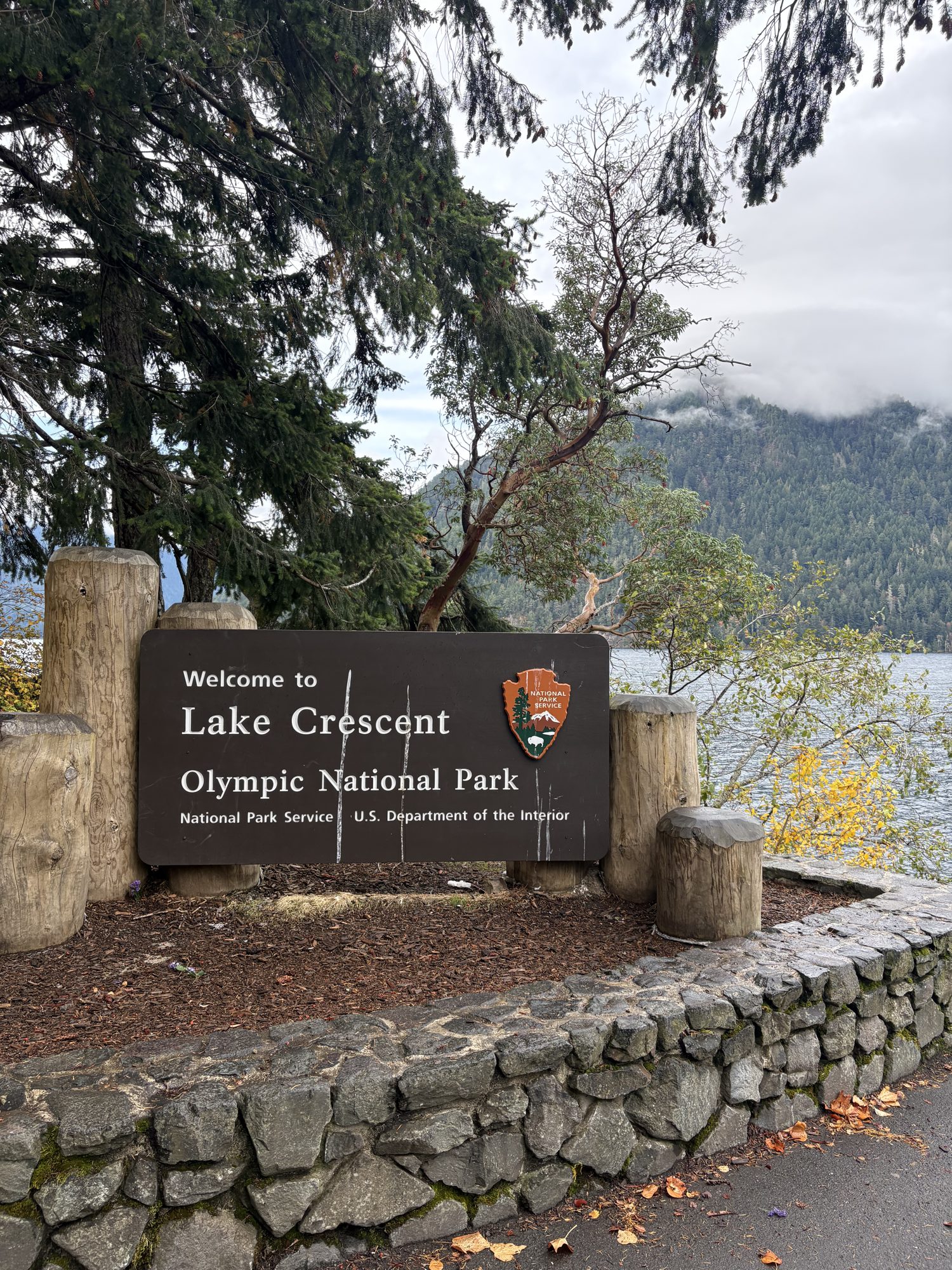
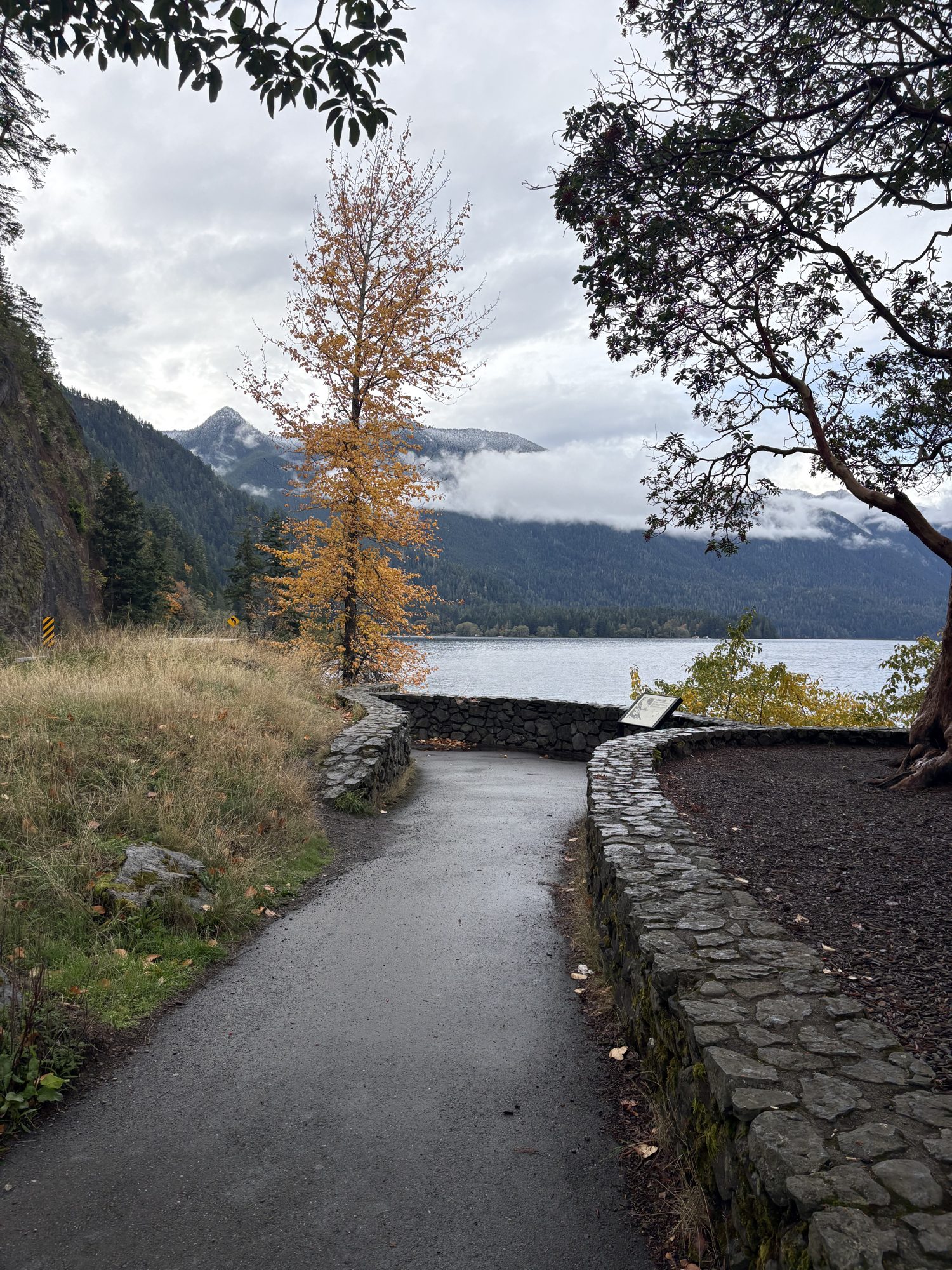
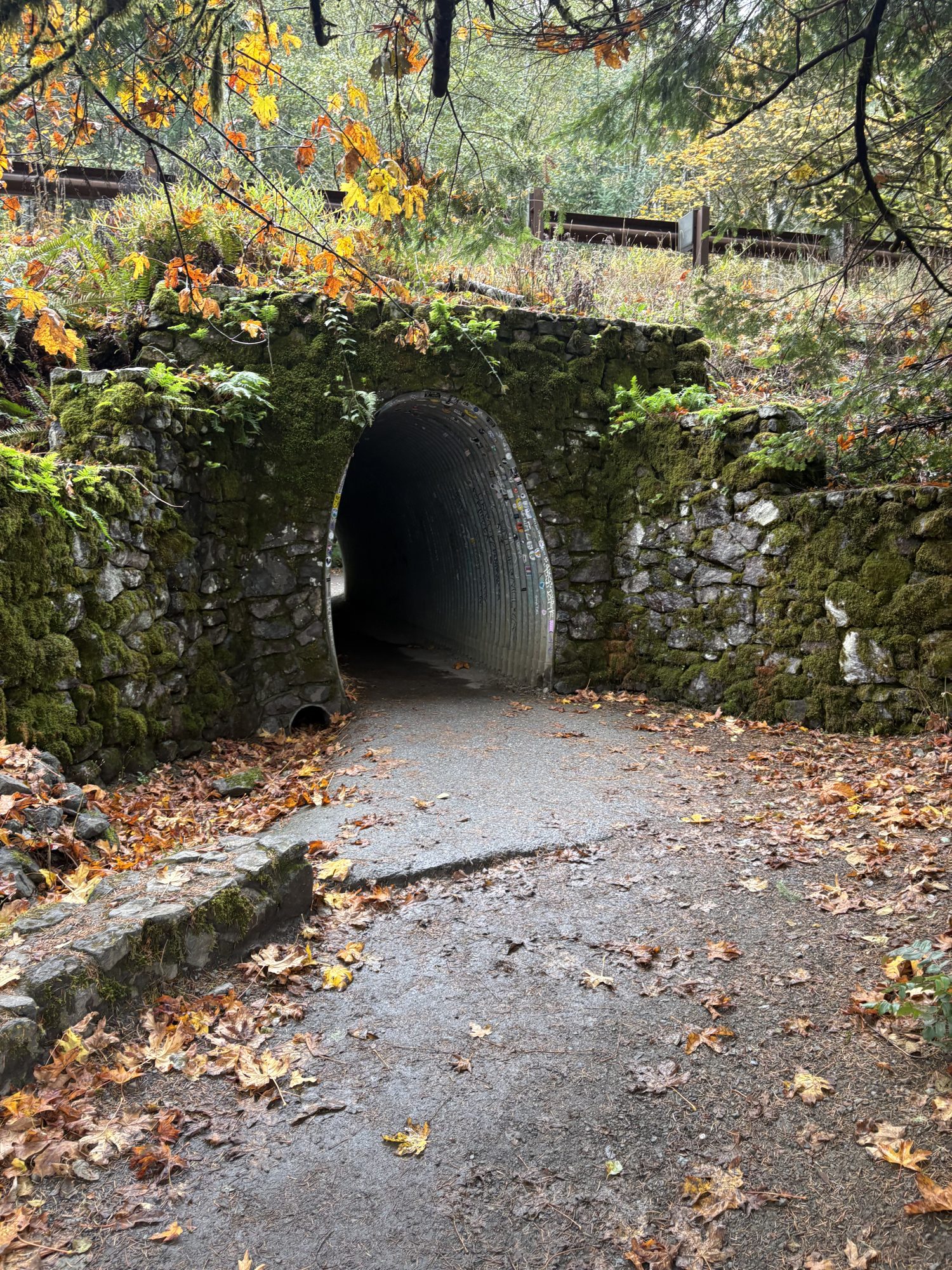
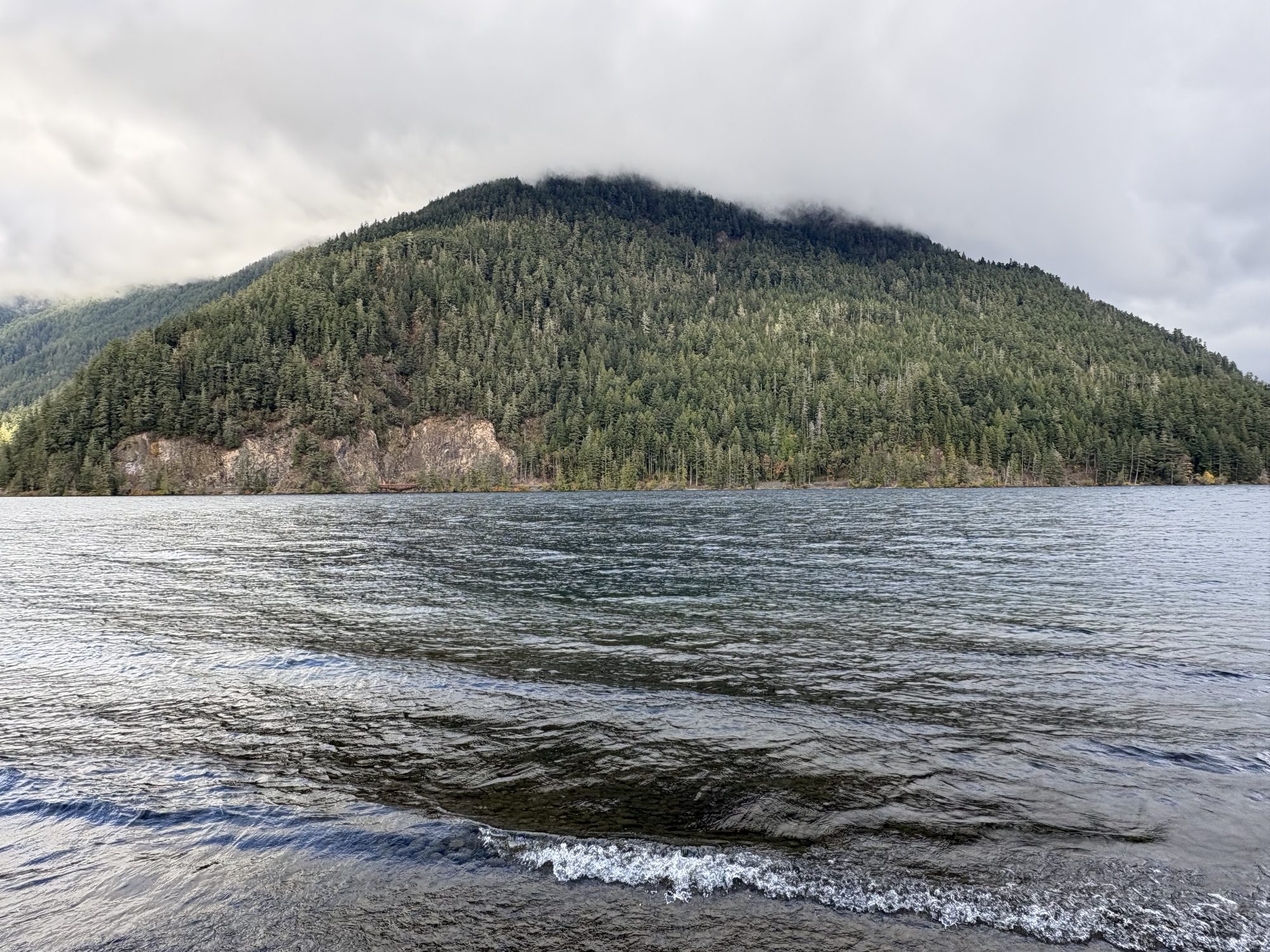
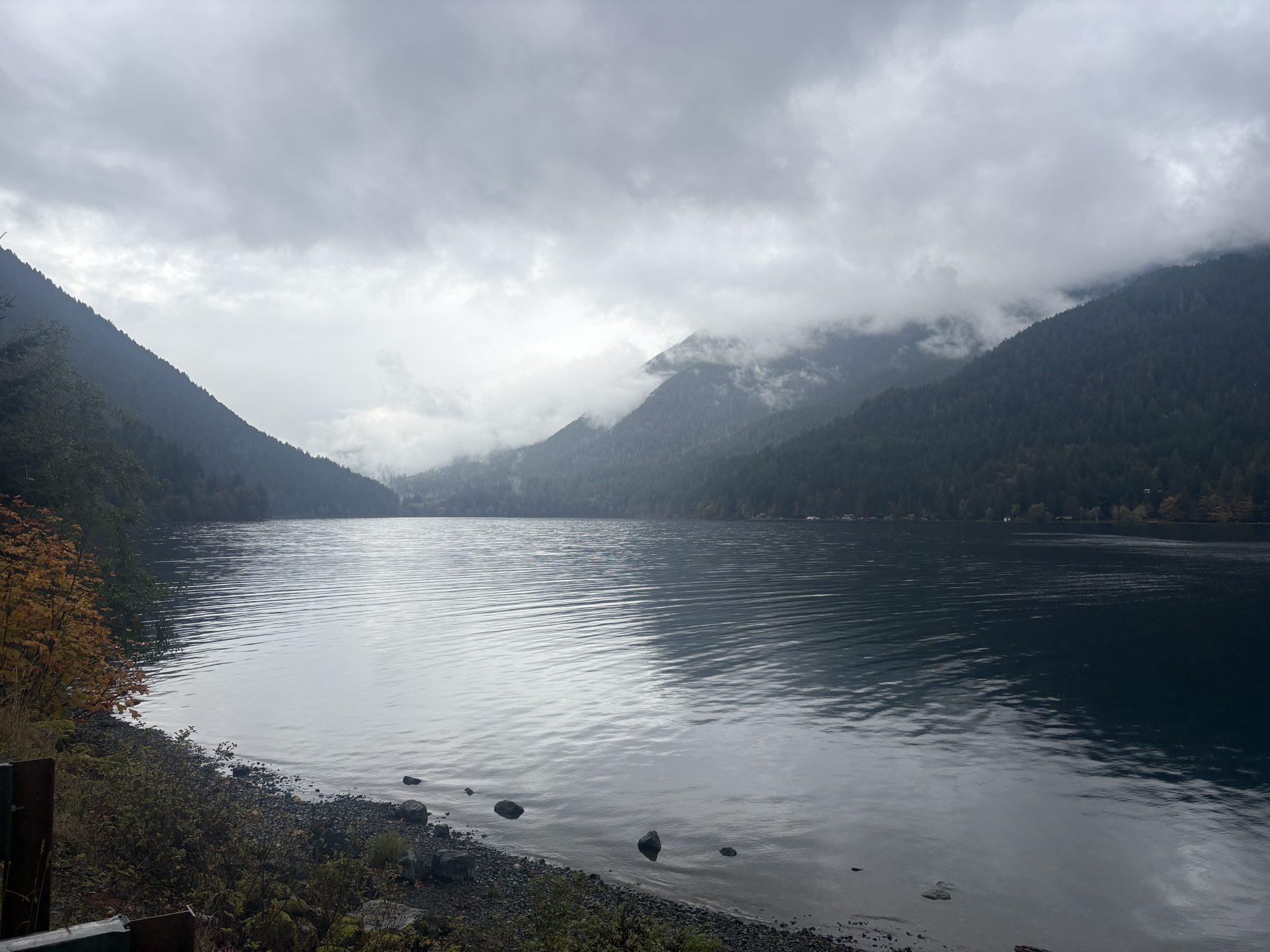
- The Spruce Railroad Trail along Lake Crescent’s north shore, out to the Devil’s Punchbowl and through the old McFee railroad tunnel. The water is that improbable shade of blue even under cloud.
- Marymere Falls, at full volume after a week of rain, through old-growth forest from the Storm King trailhead.
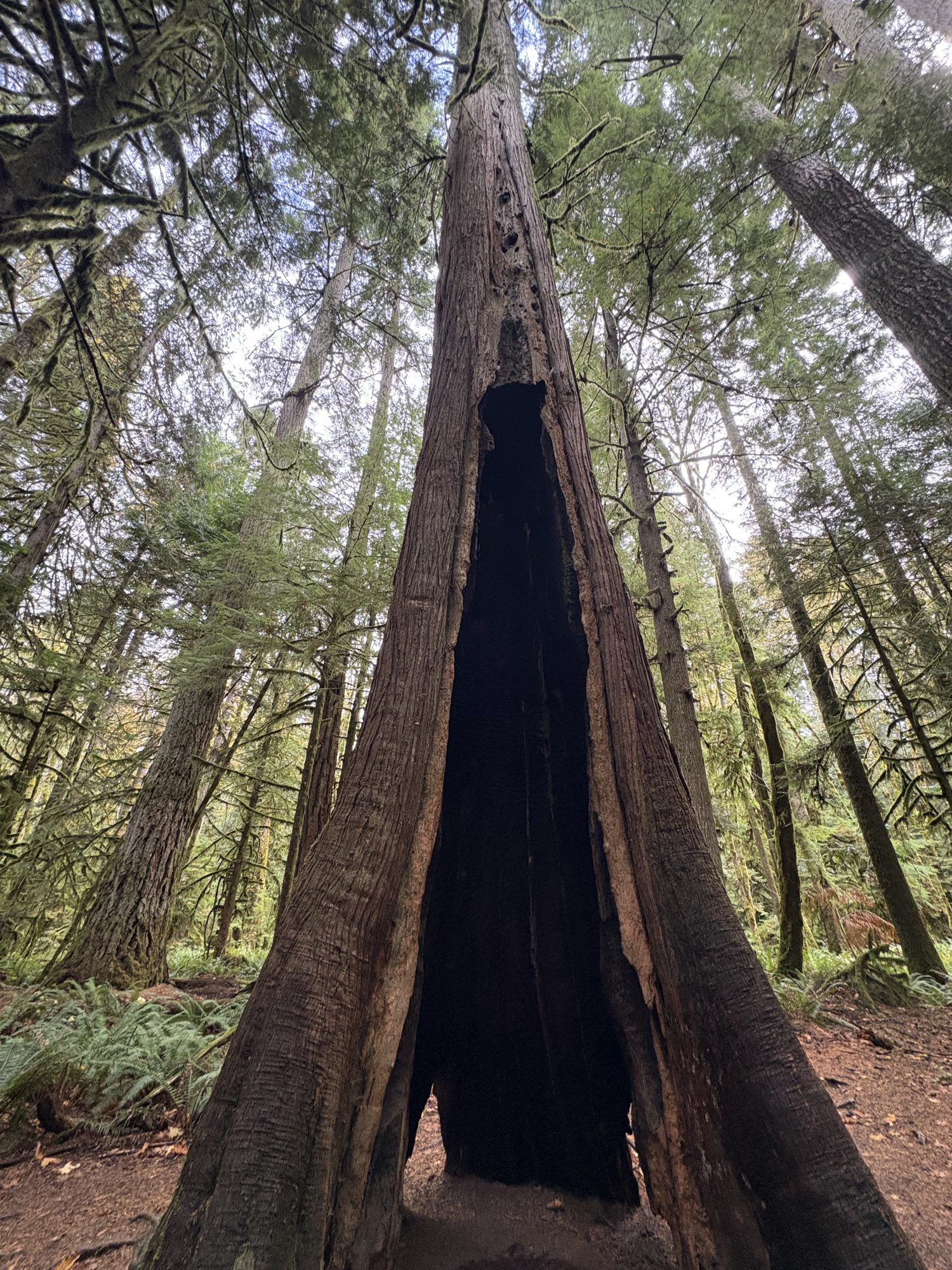
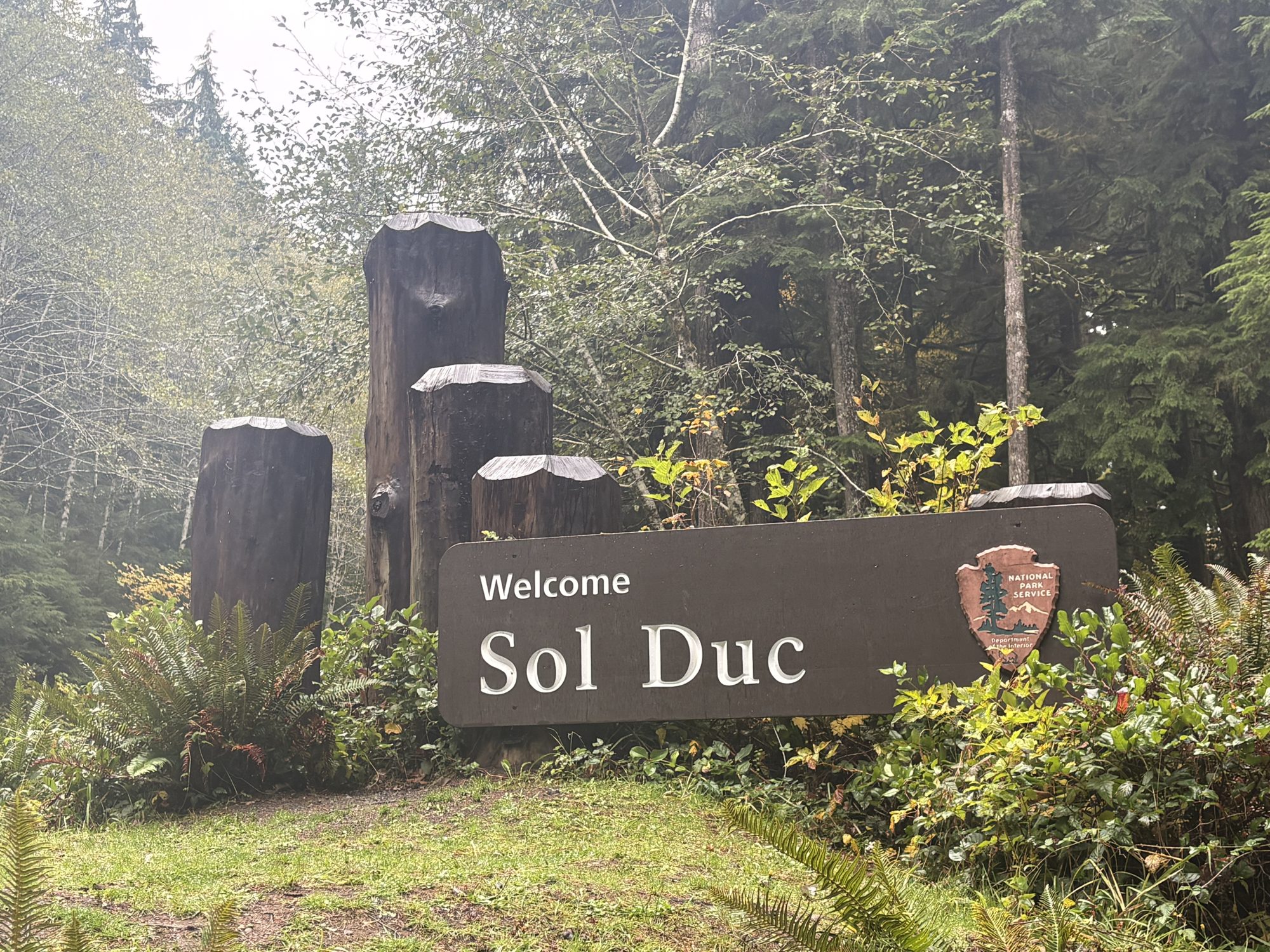
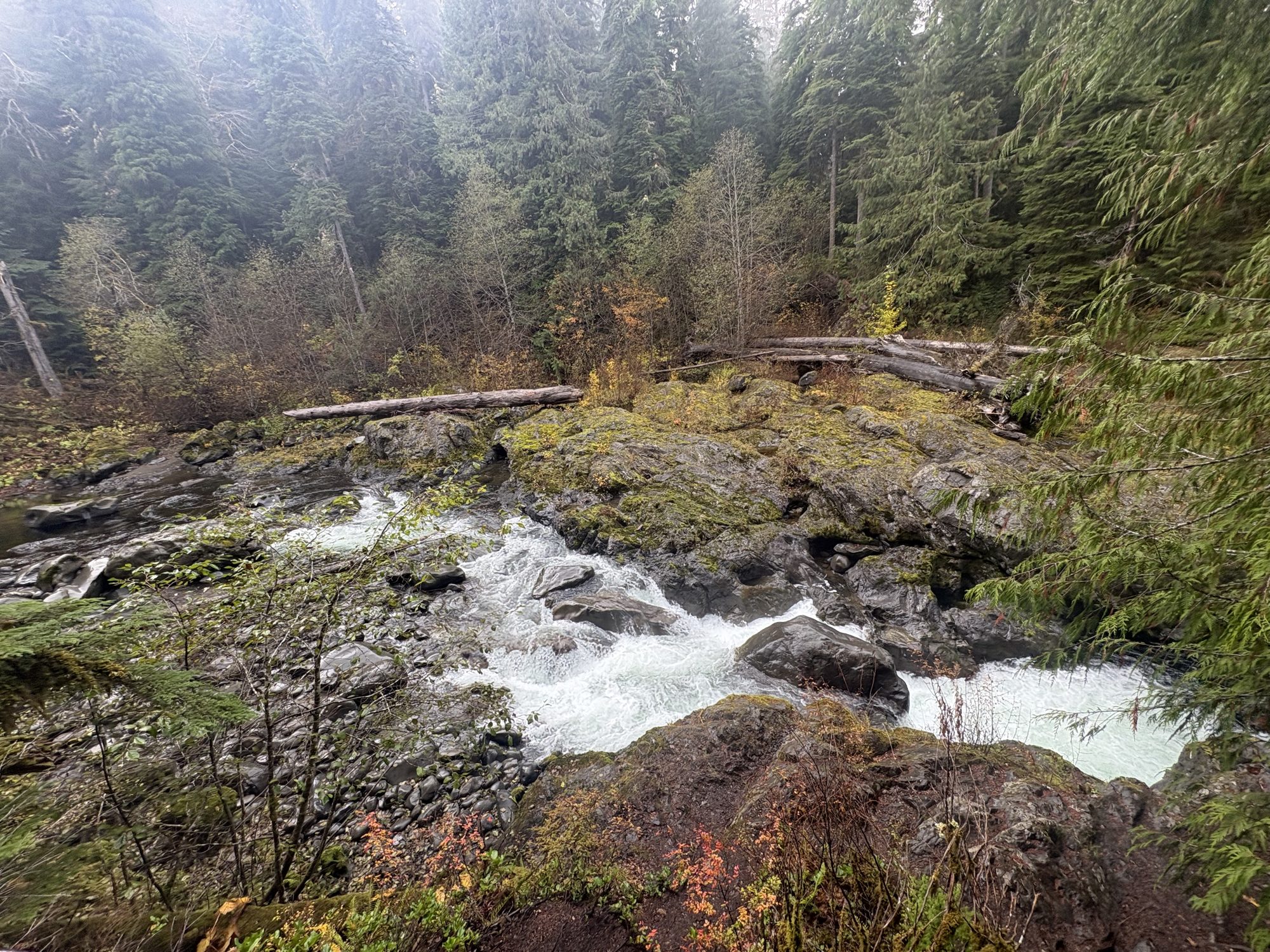
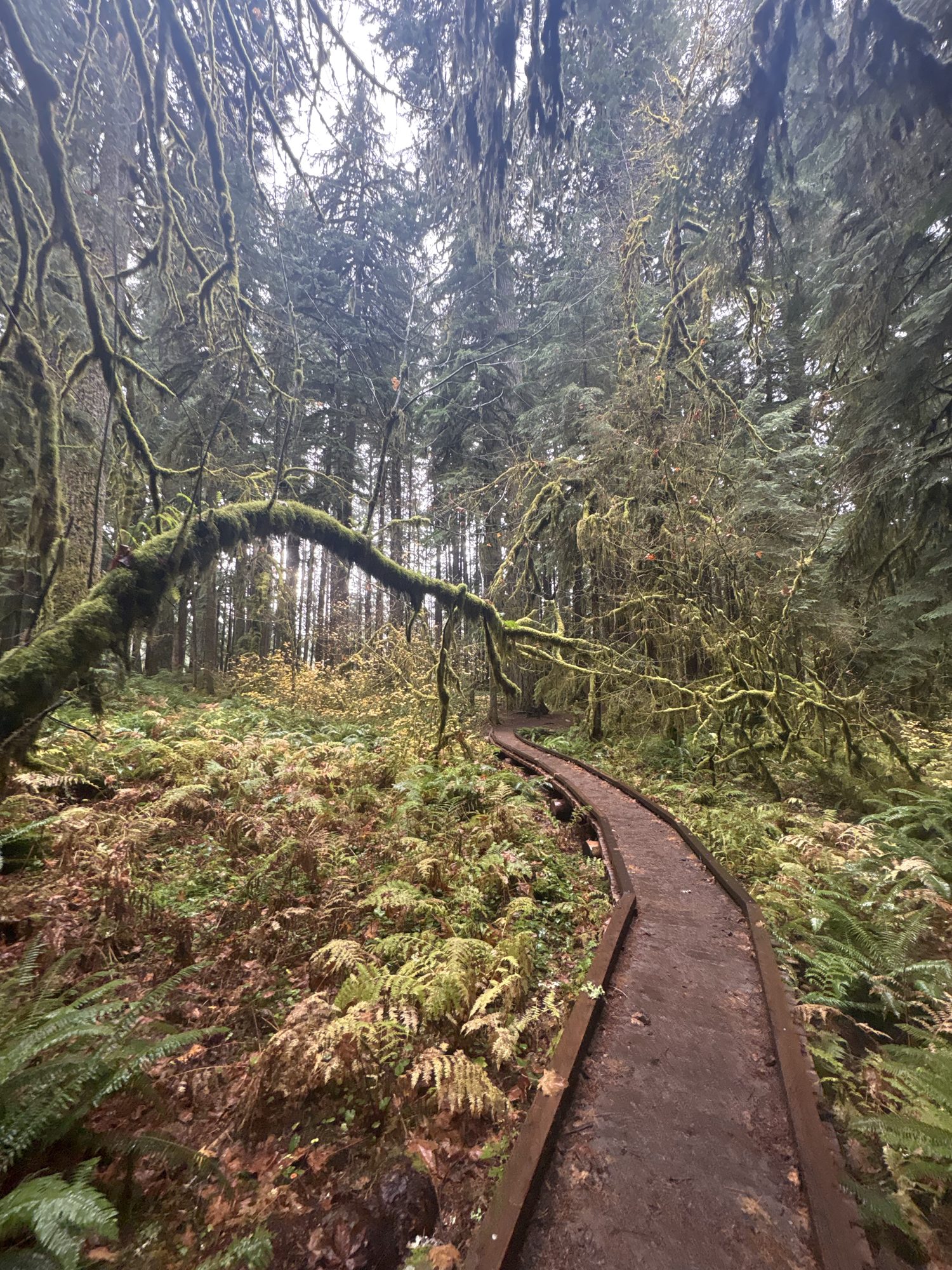
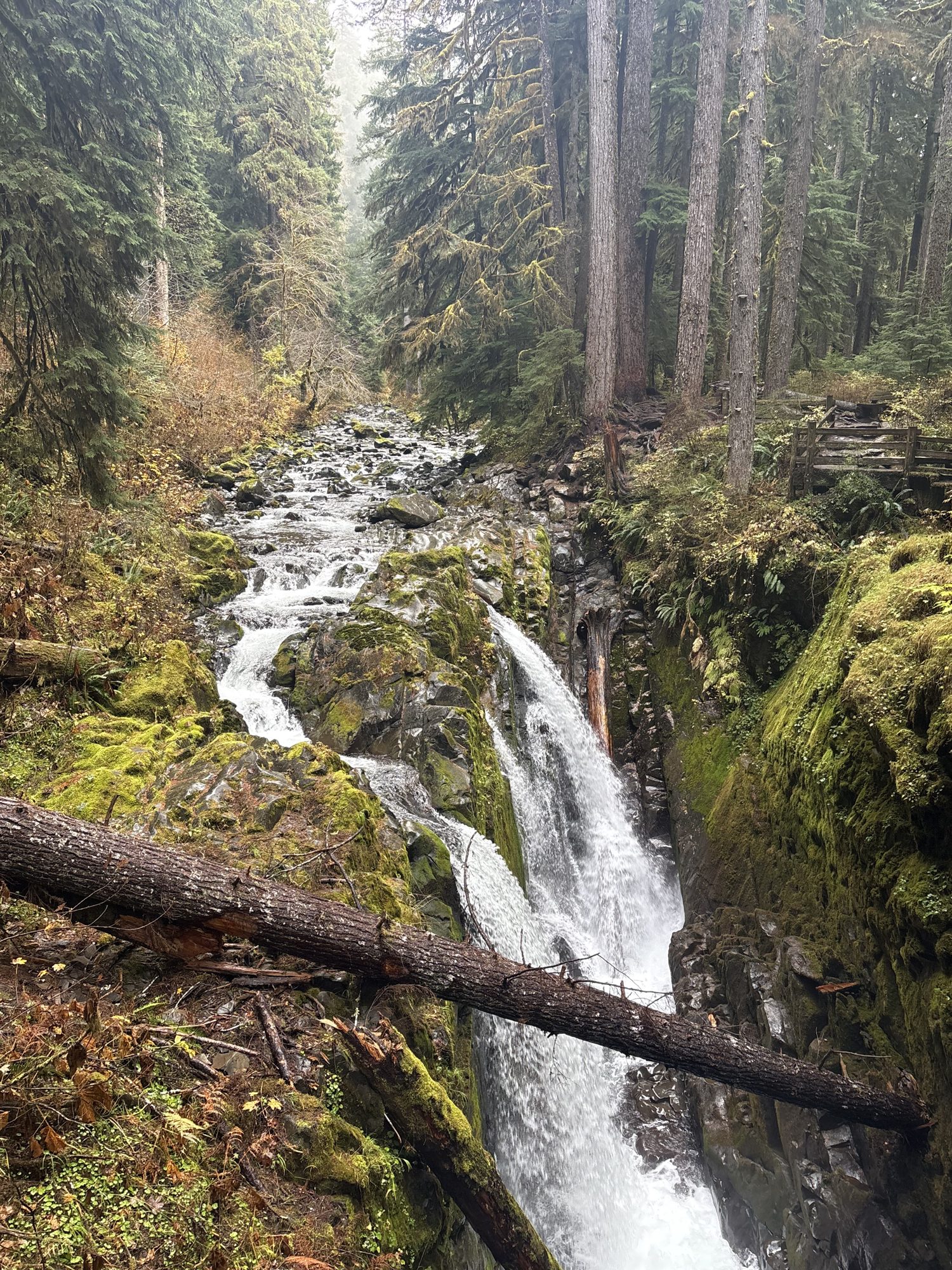
- Sol Duc in the afternoon: the Ancient Groves loop, the Salmon Cascades, and Sol Duc Falls.
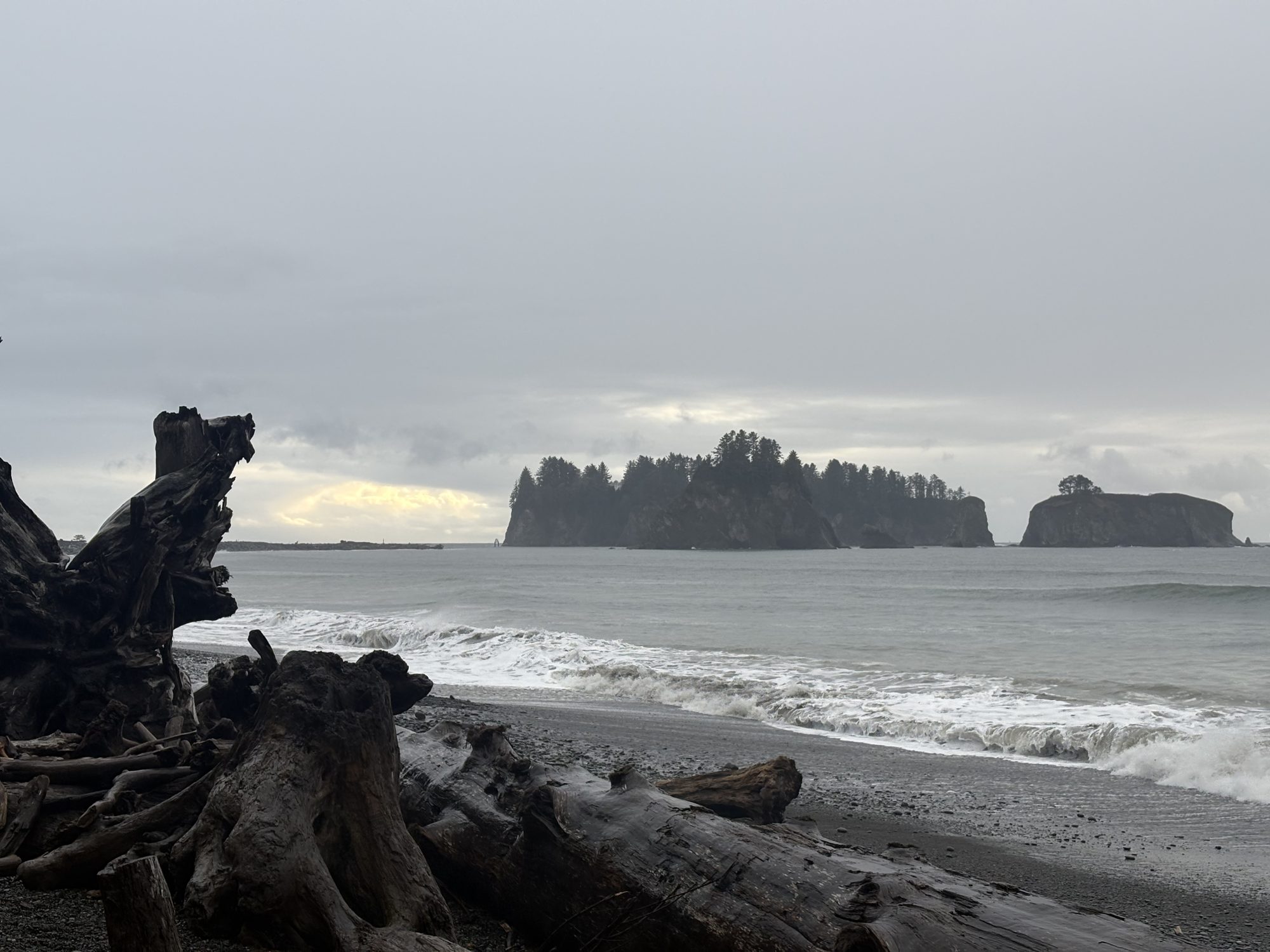
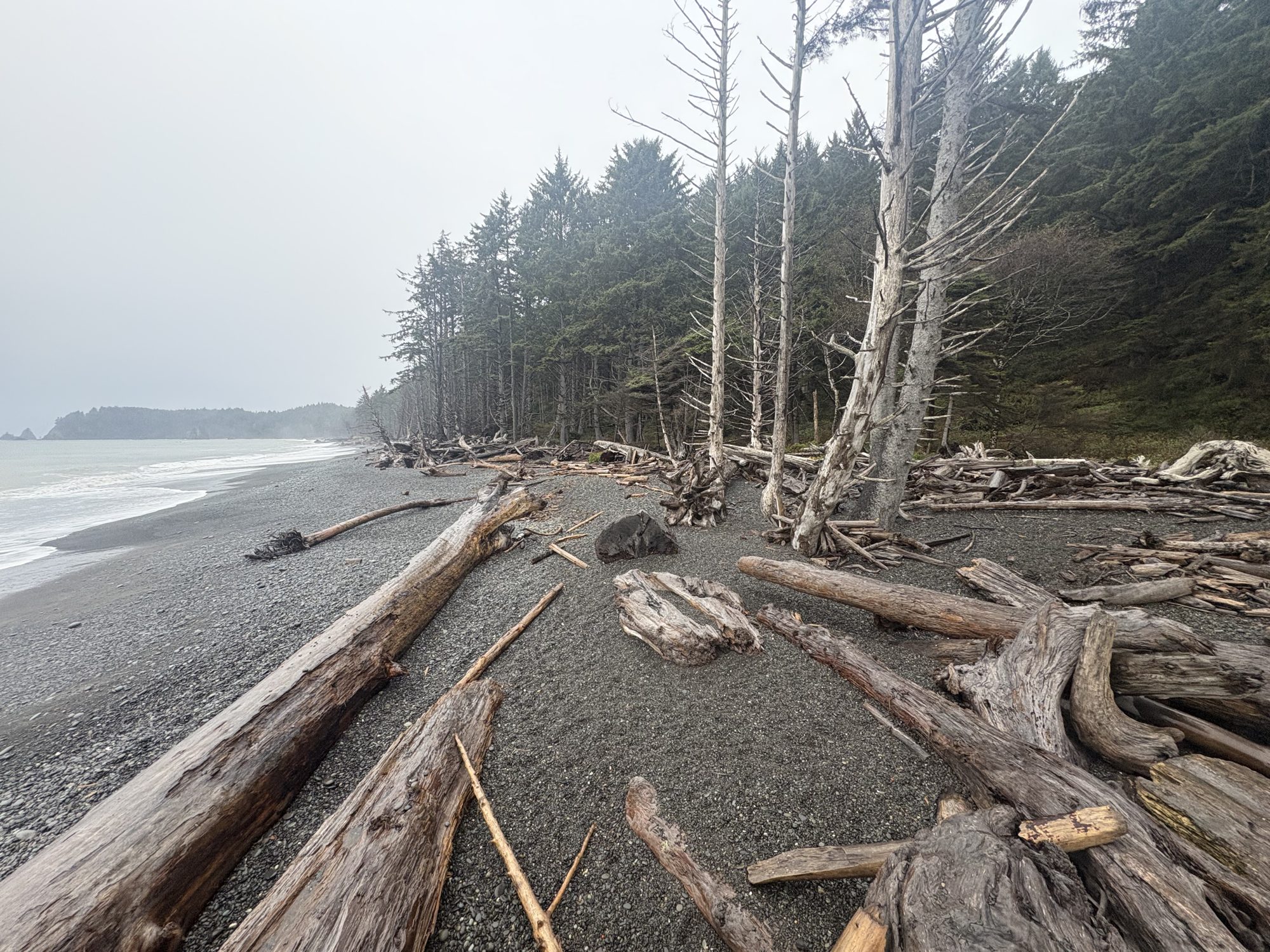
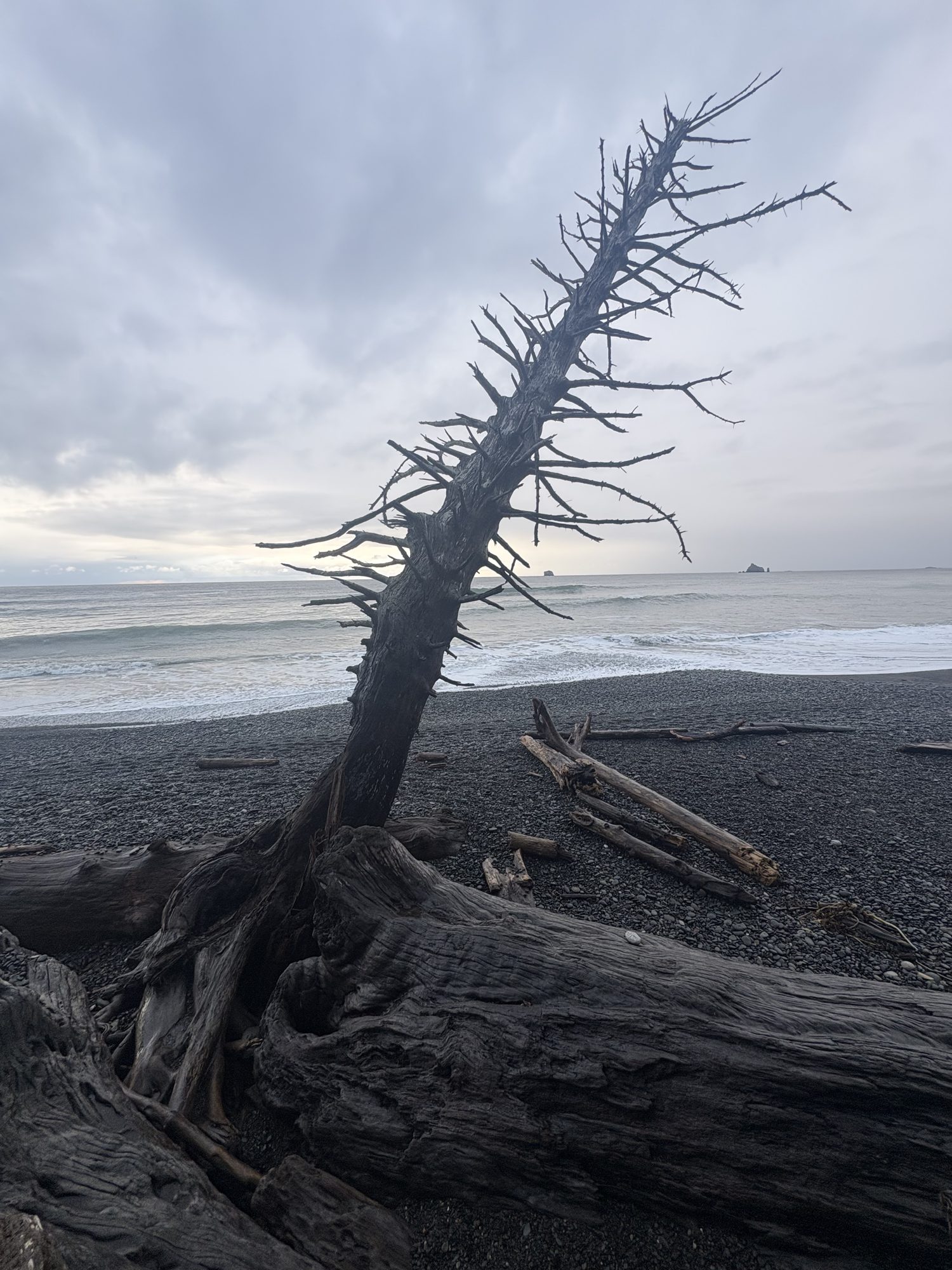
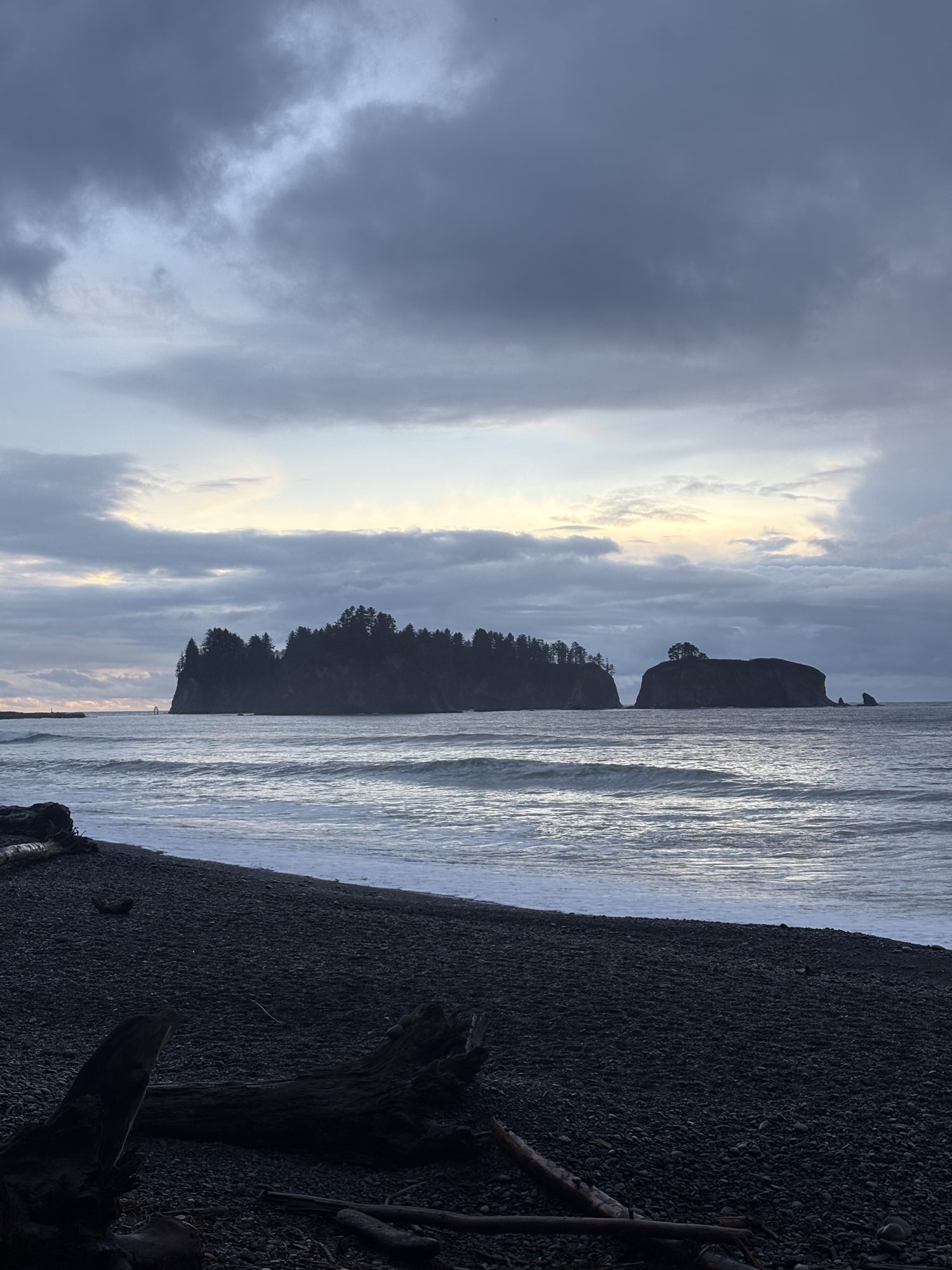
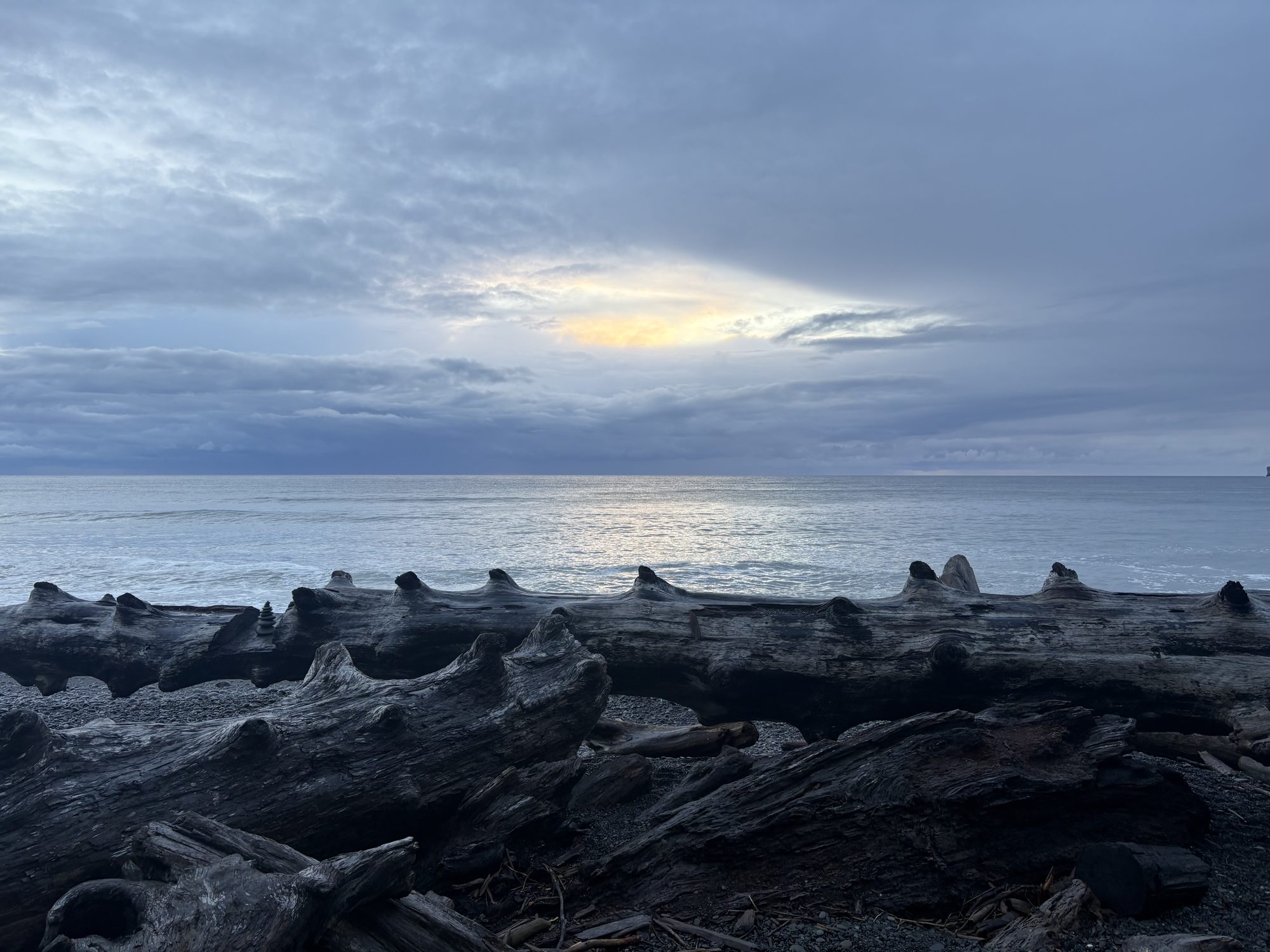
- Rialto Beach for the last light: driftwood piled like matchsticks, bleached ghost trees, and James Island going dark offshore.
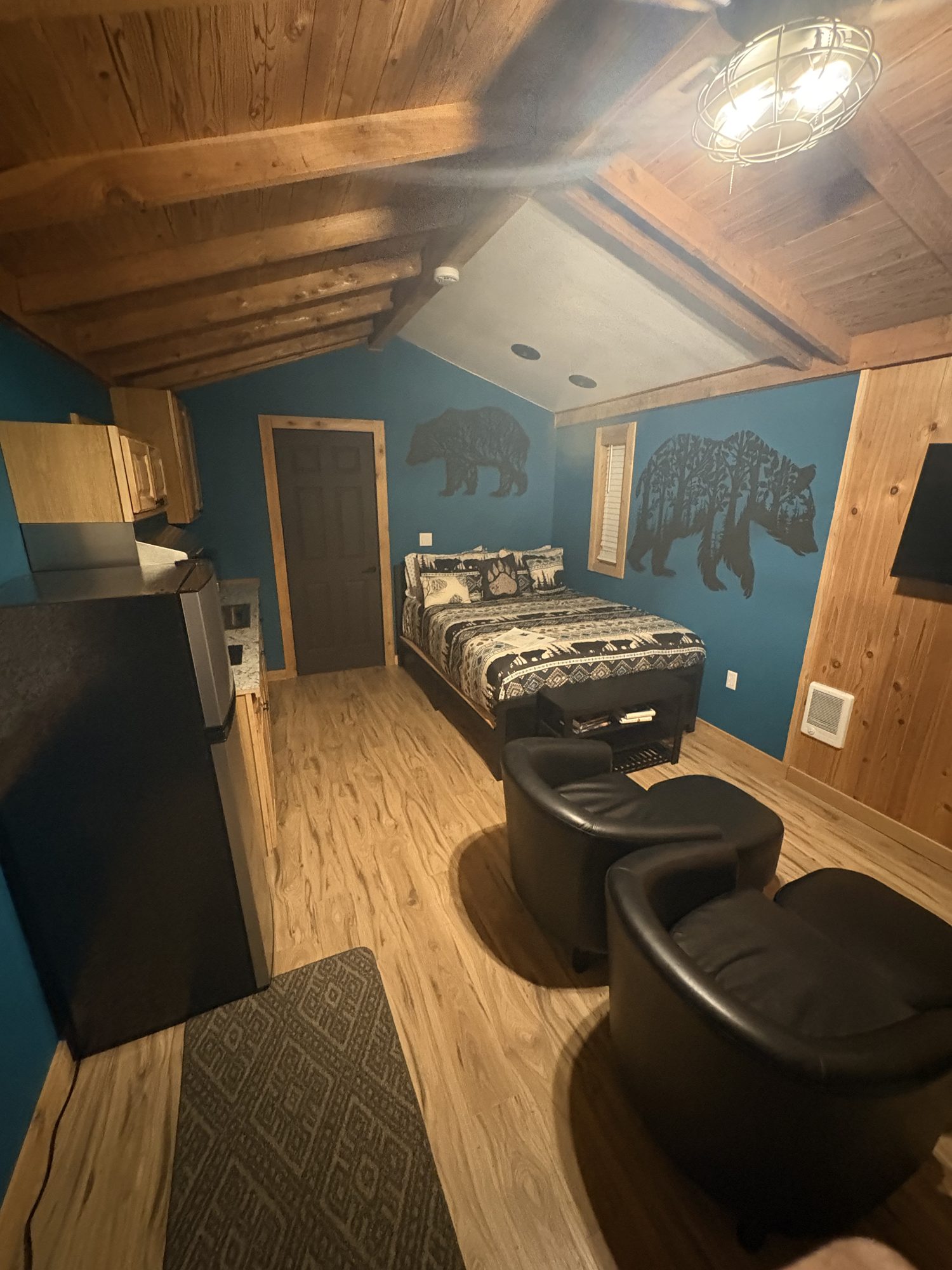
Then on to Forks, where we took Pacific Pizza back to a tiny bear-themed cabin and called it a day.
Saturday: Rainforest and Sea Stacks
Out of Forks at 7 AM to reach the Hoh at first light, and for the first time all trip the sky cleared:
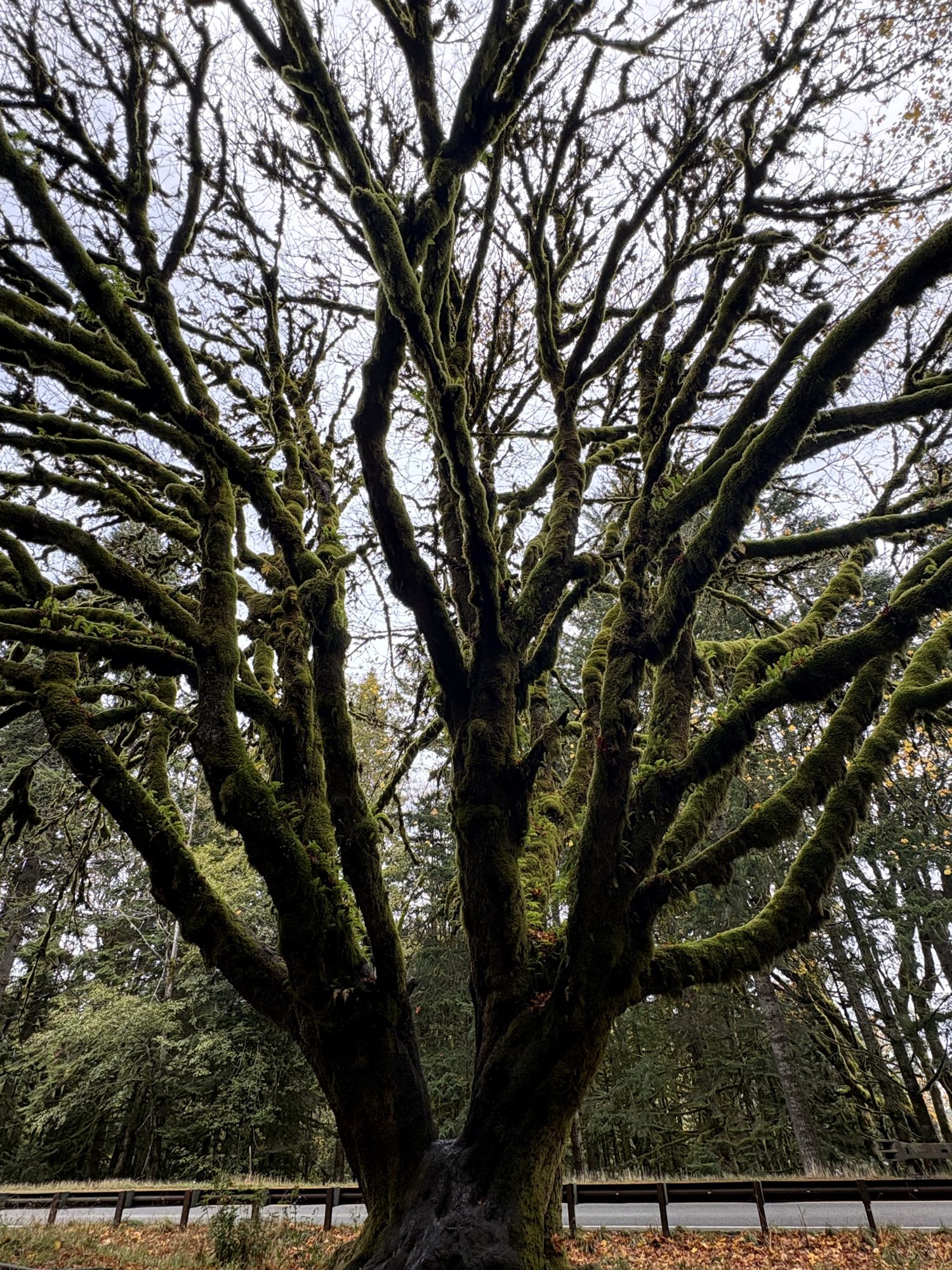
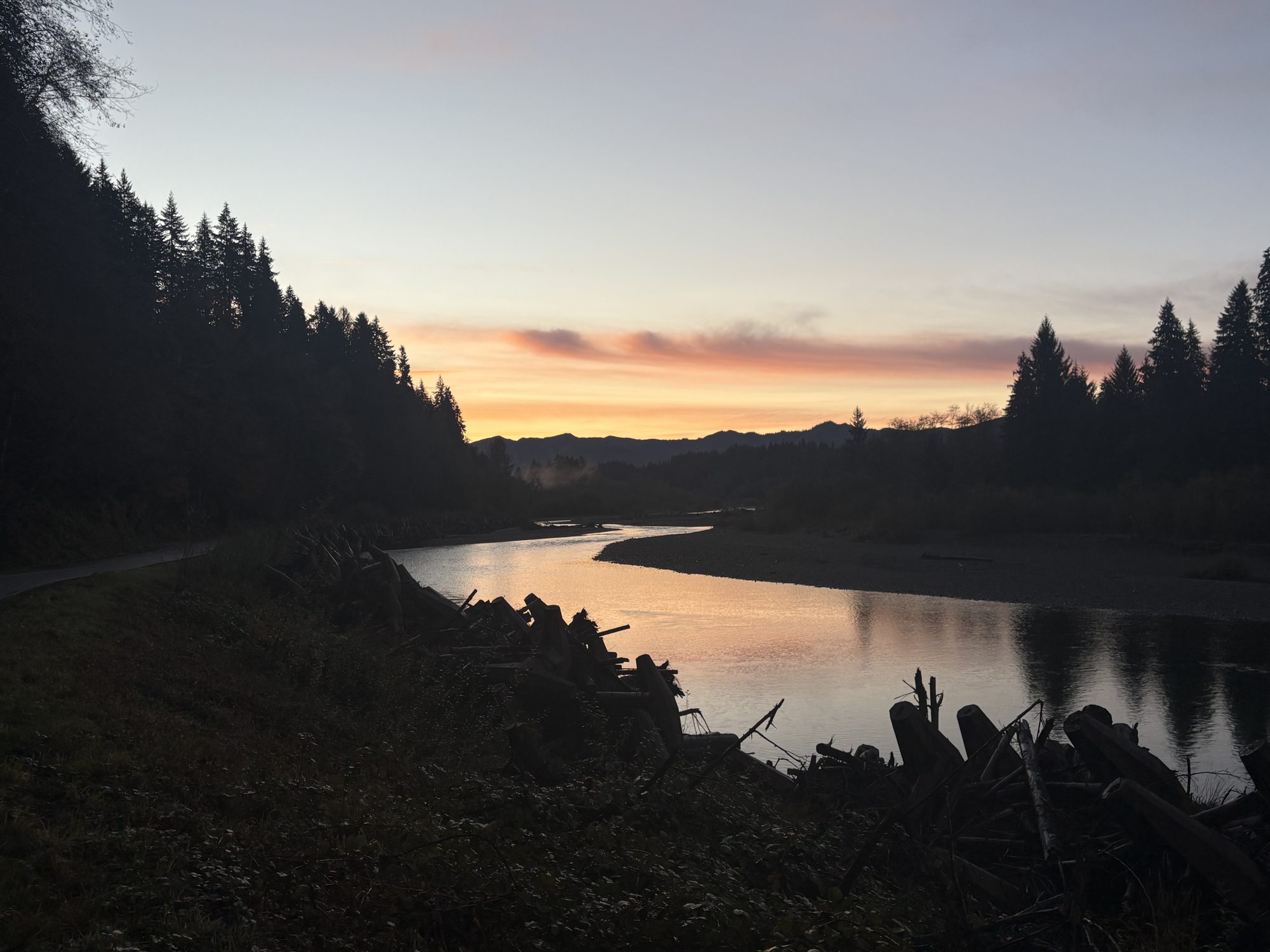
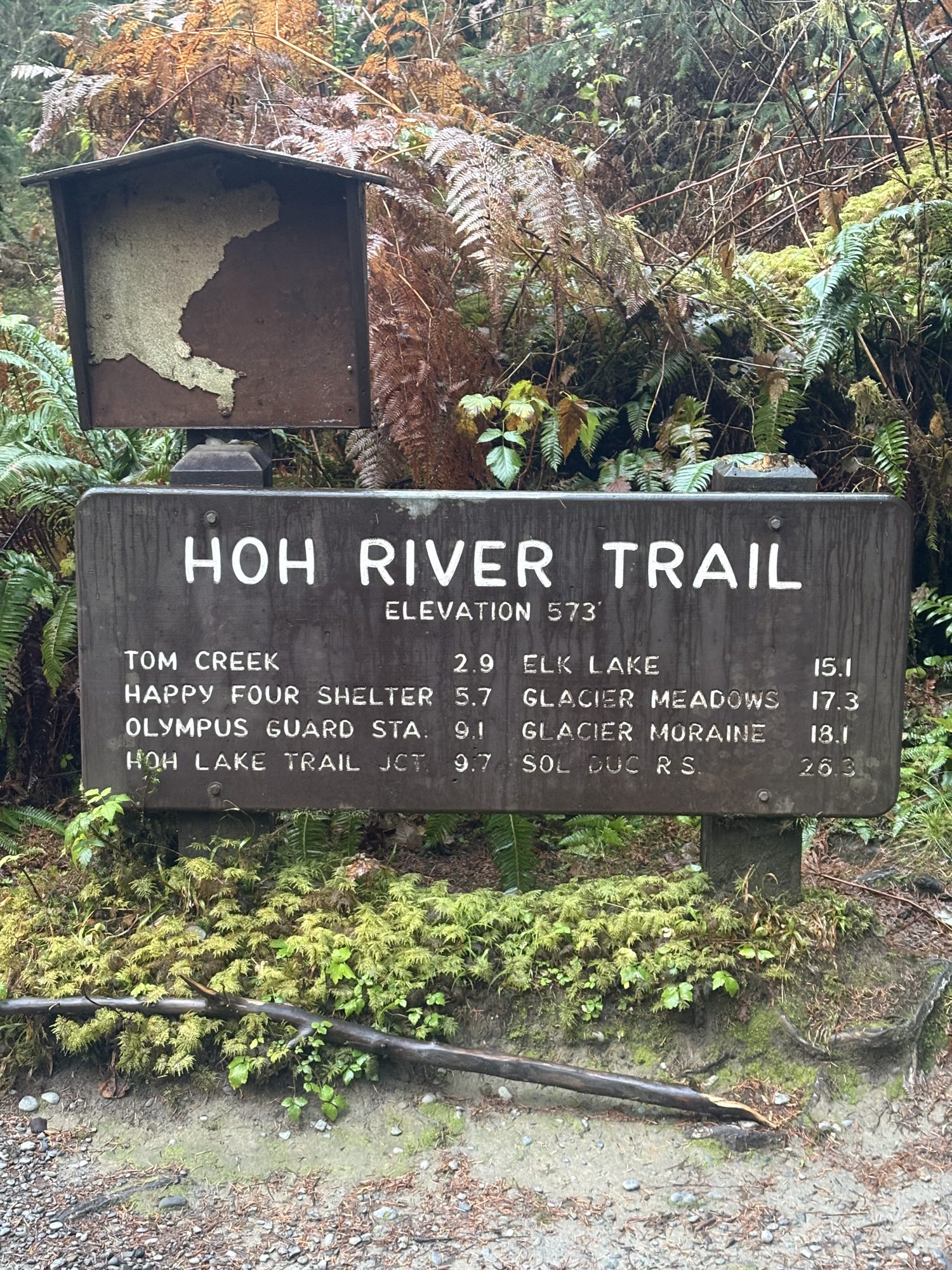
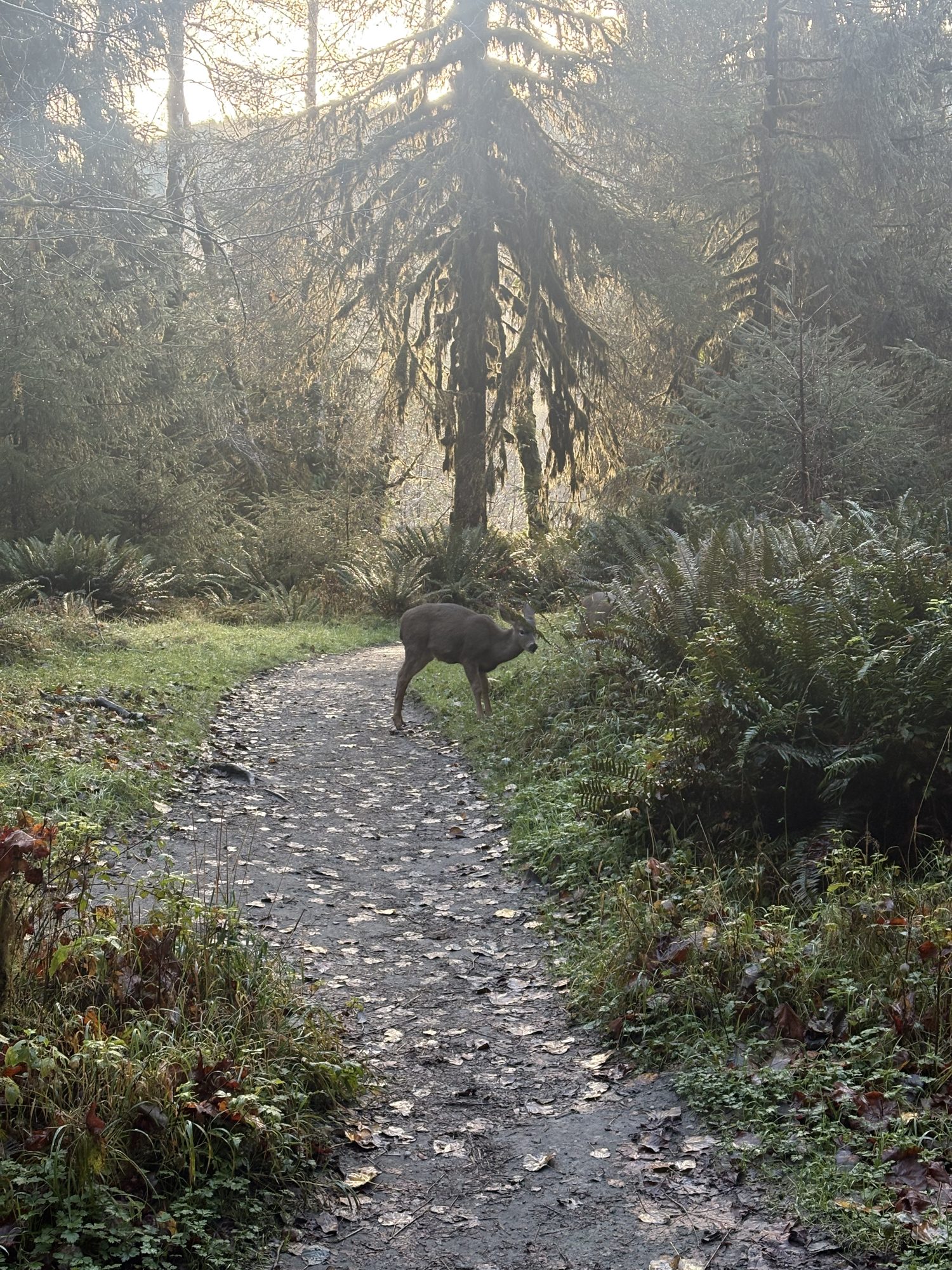
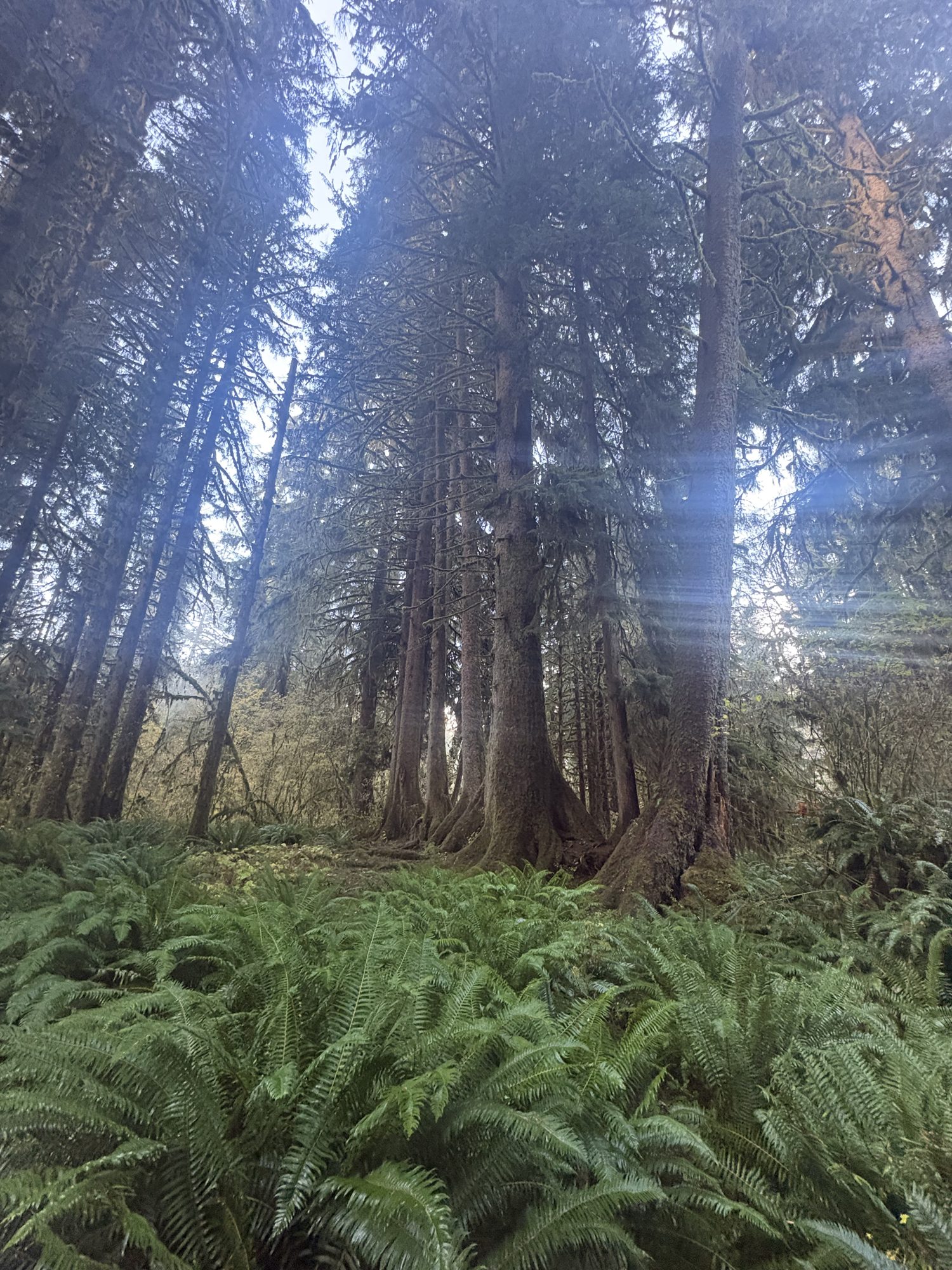
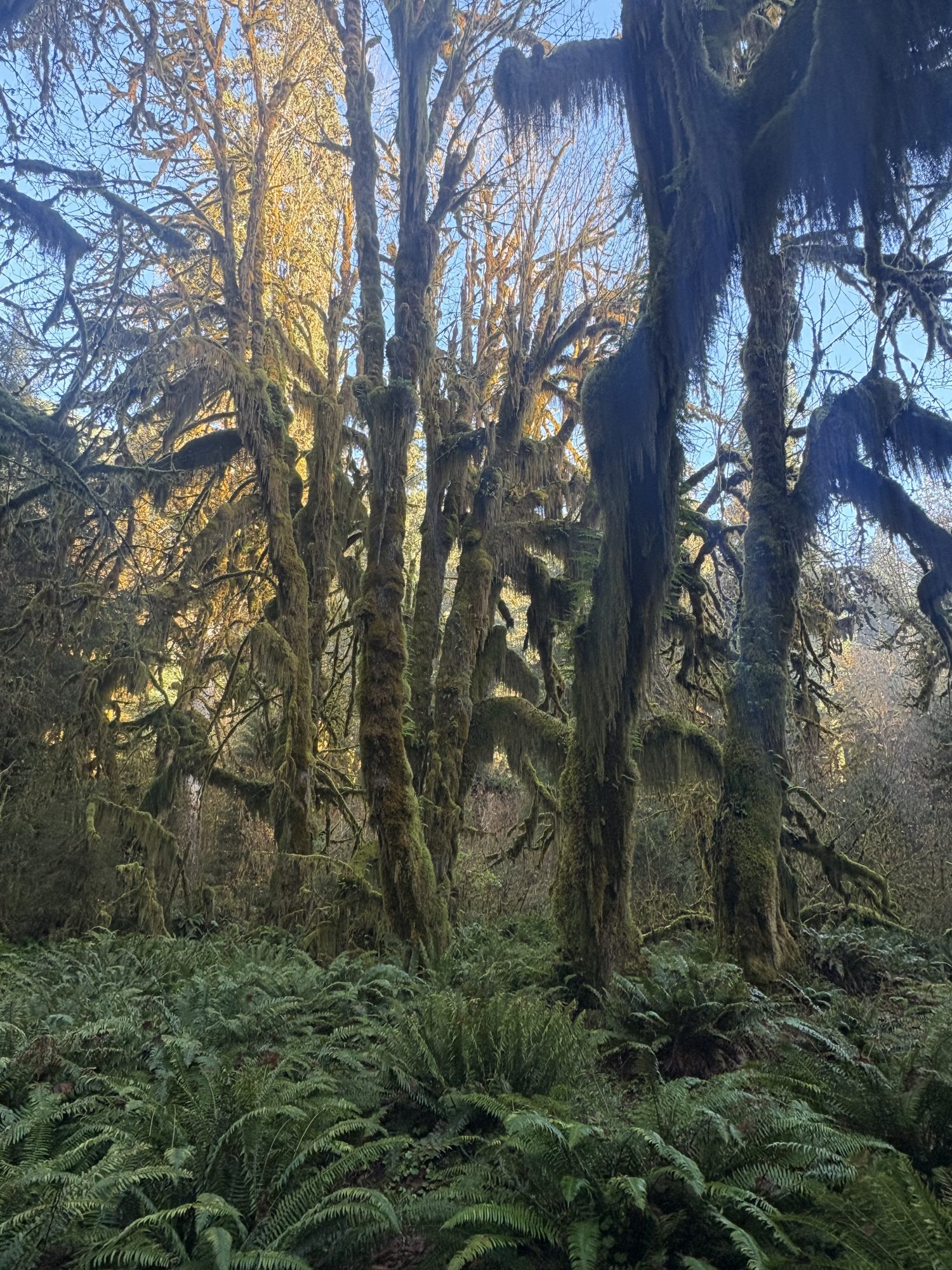
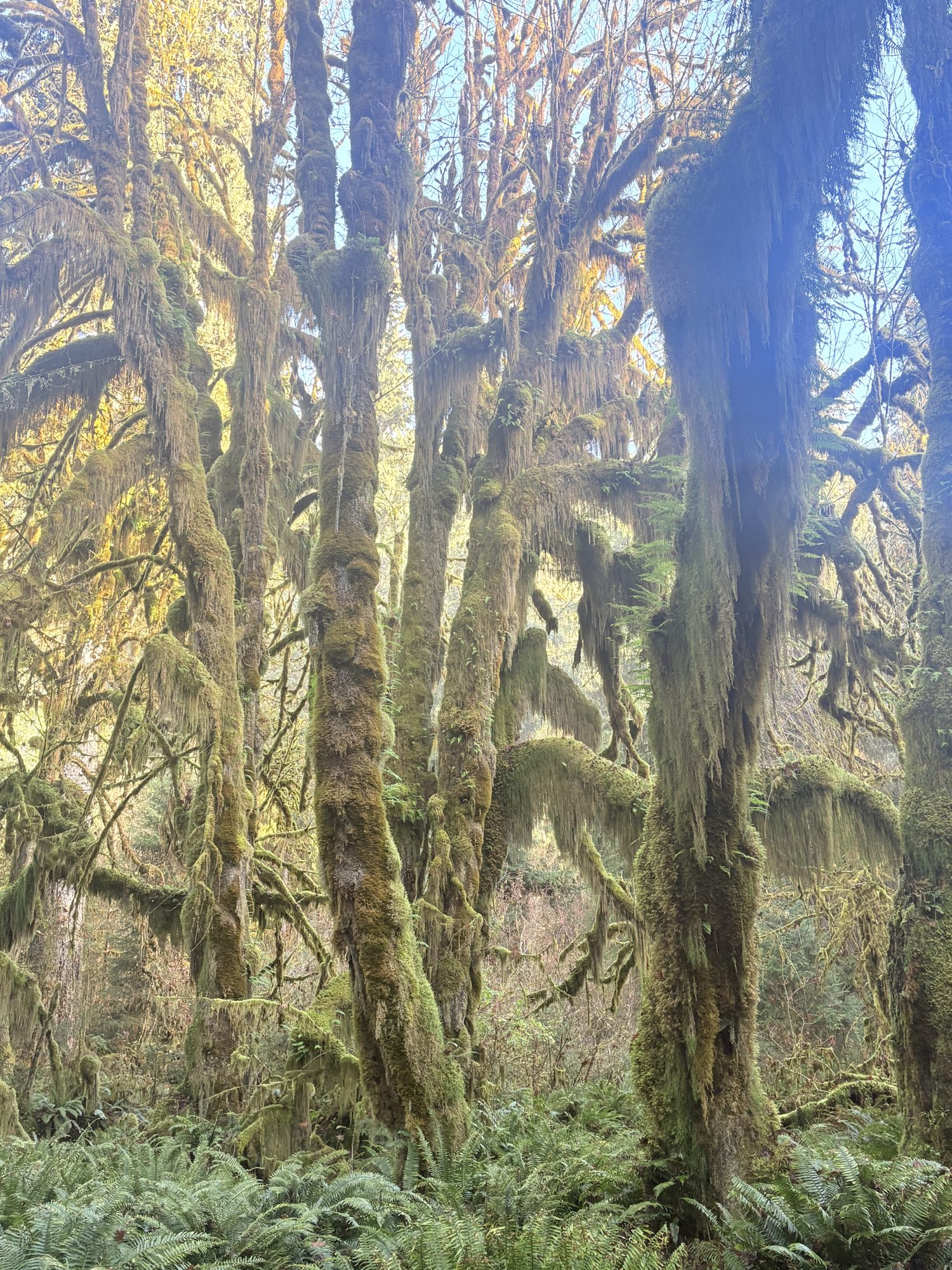
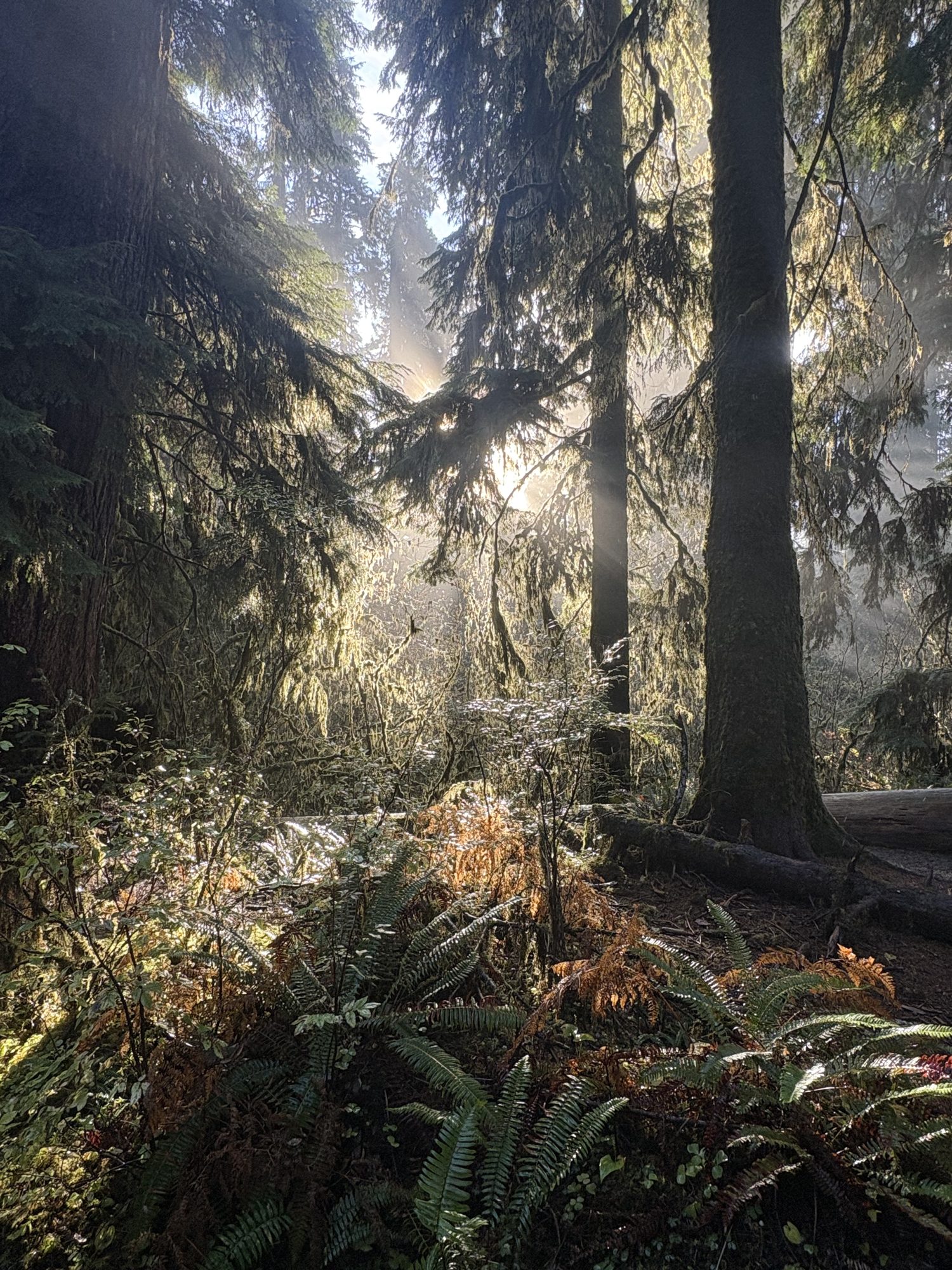
- The Hoh River Trail at dawn: flat, quiet, and dim under moss-draped Sitka spruce and maple.
- The Hoh Rain Forest Visitor Center right as it opened at 9, for the first passport stamp.
- The Hall of Mosses and the Spruce Nature Trail.
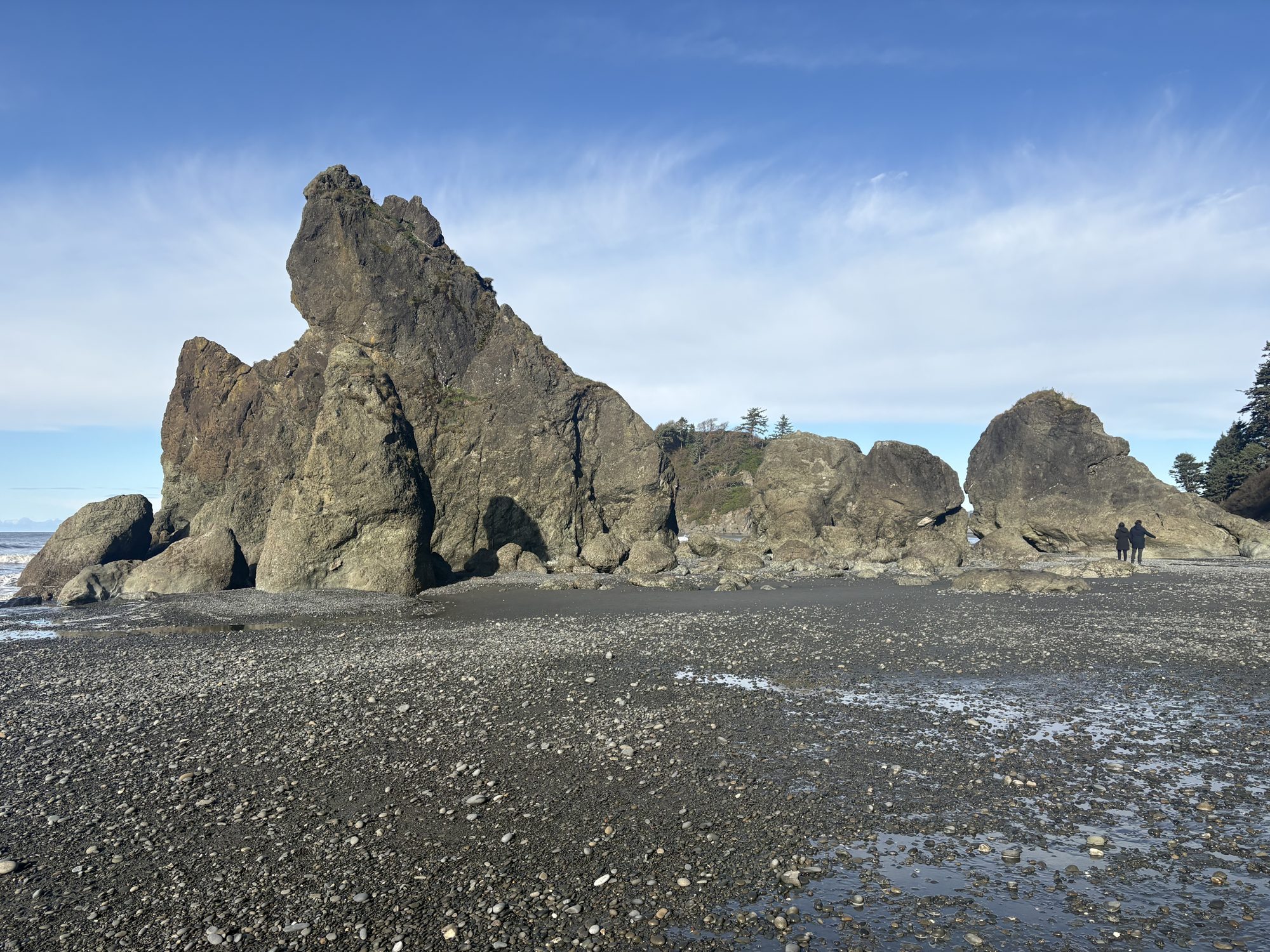
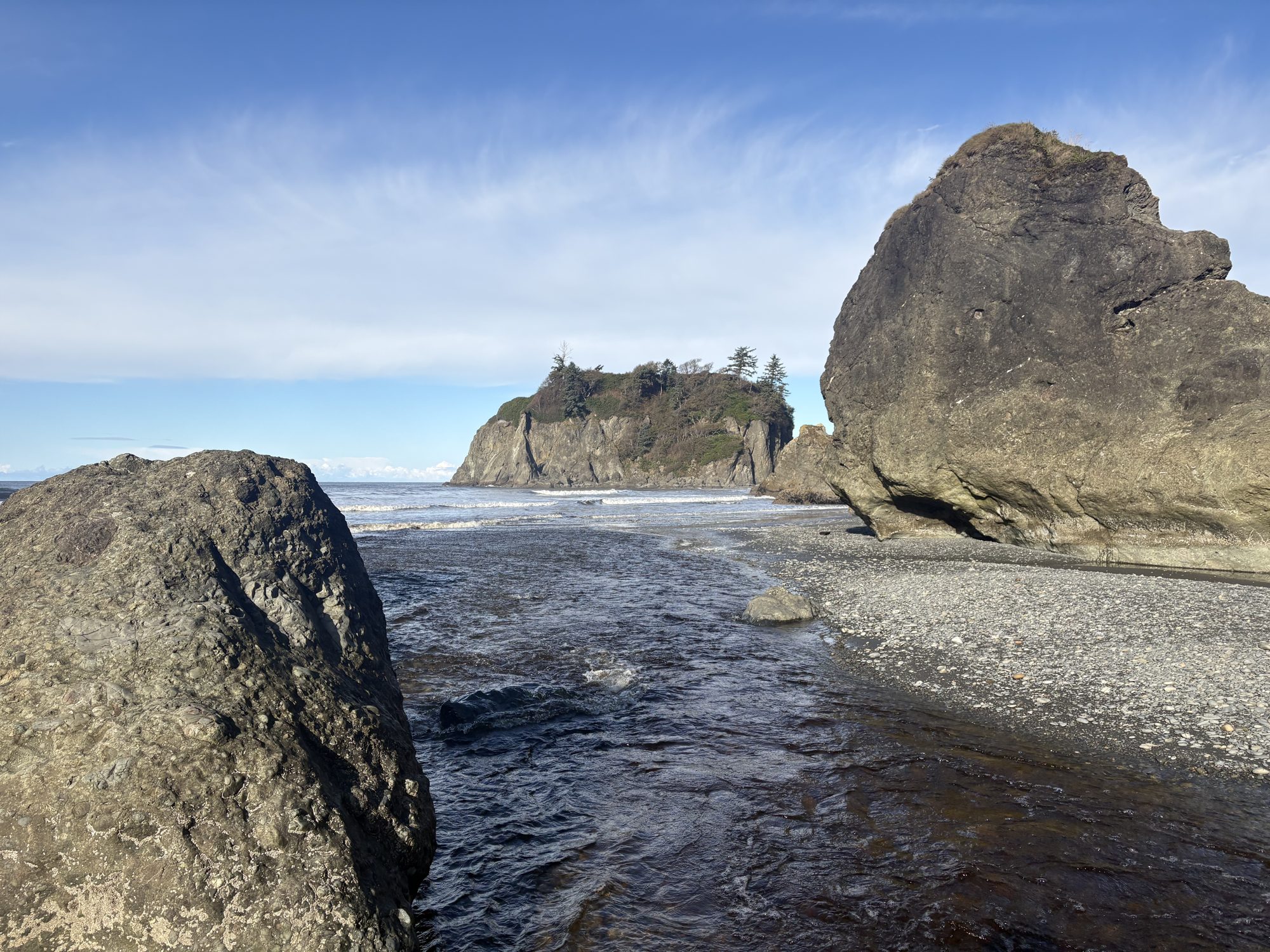
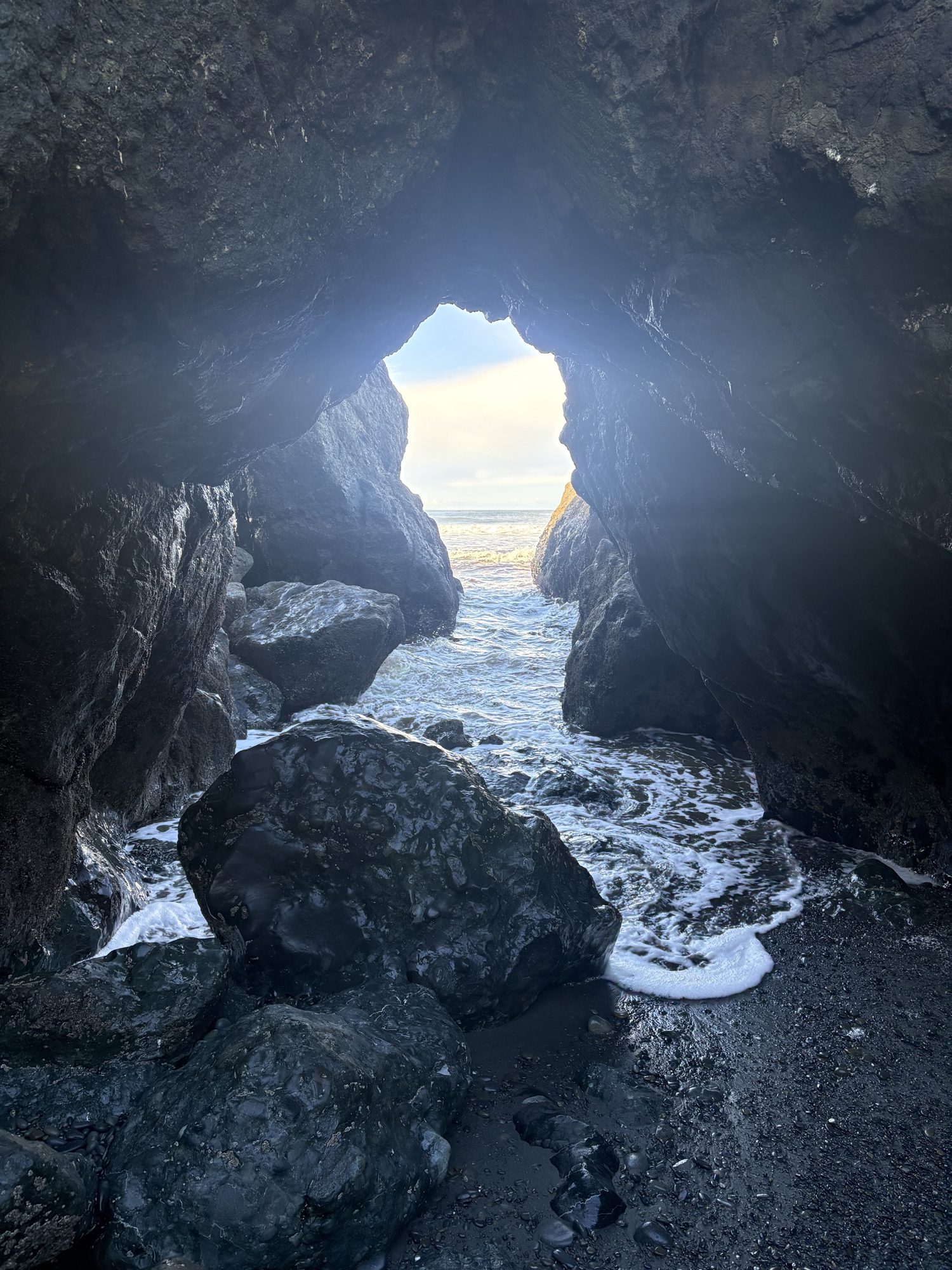
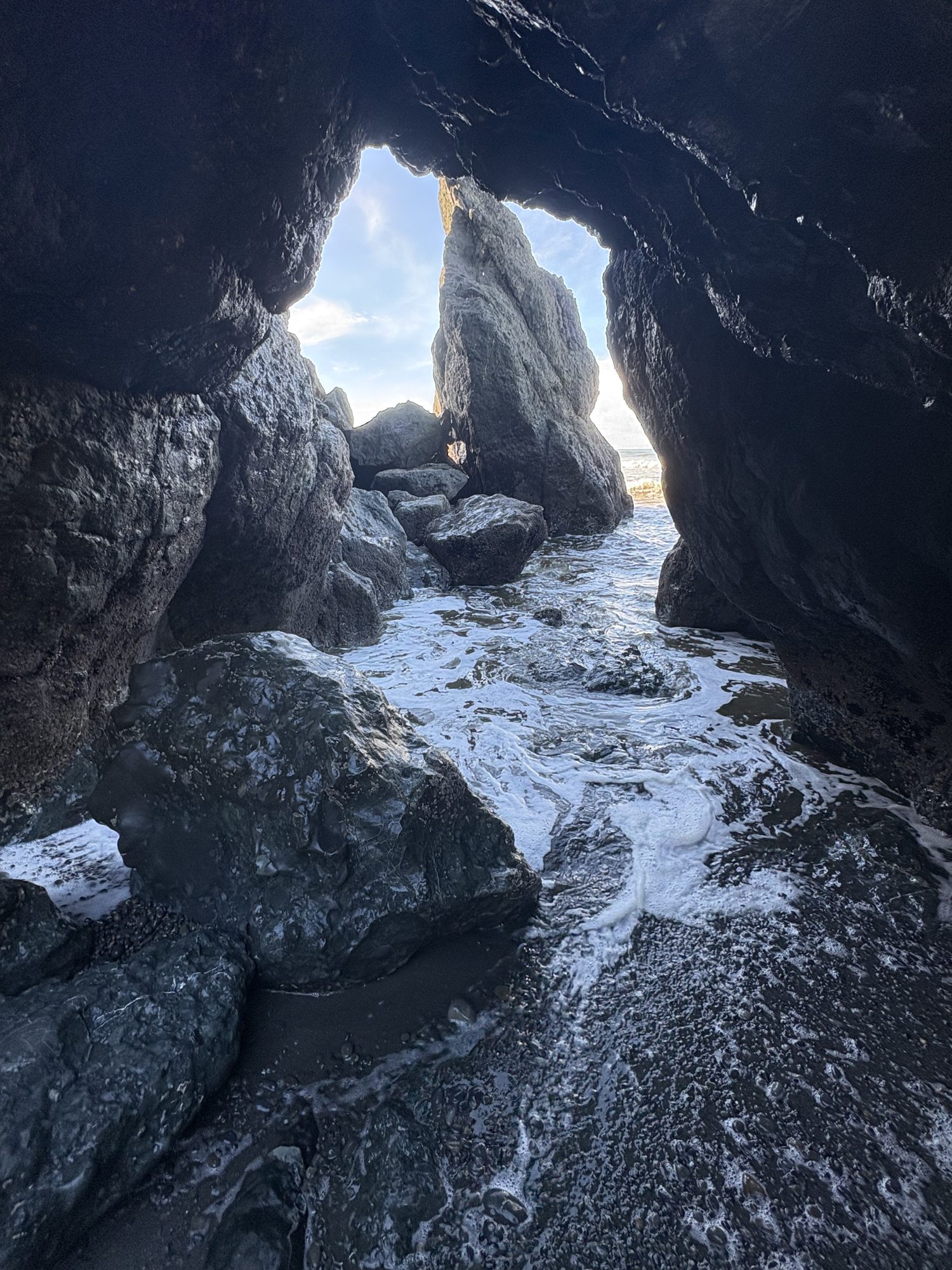
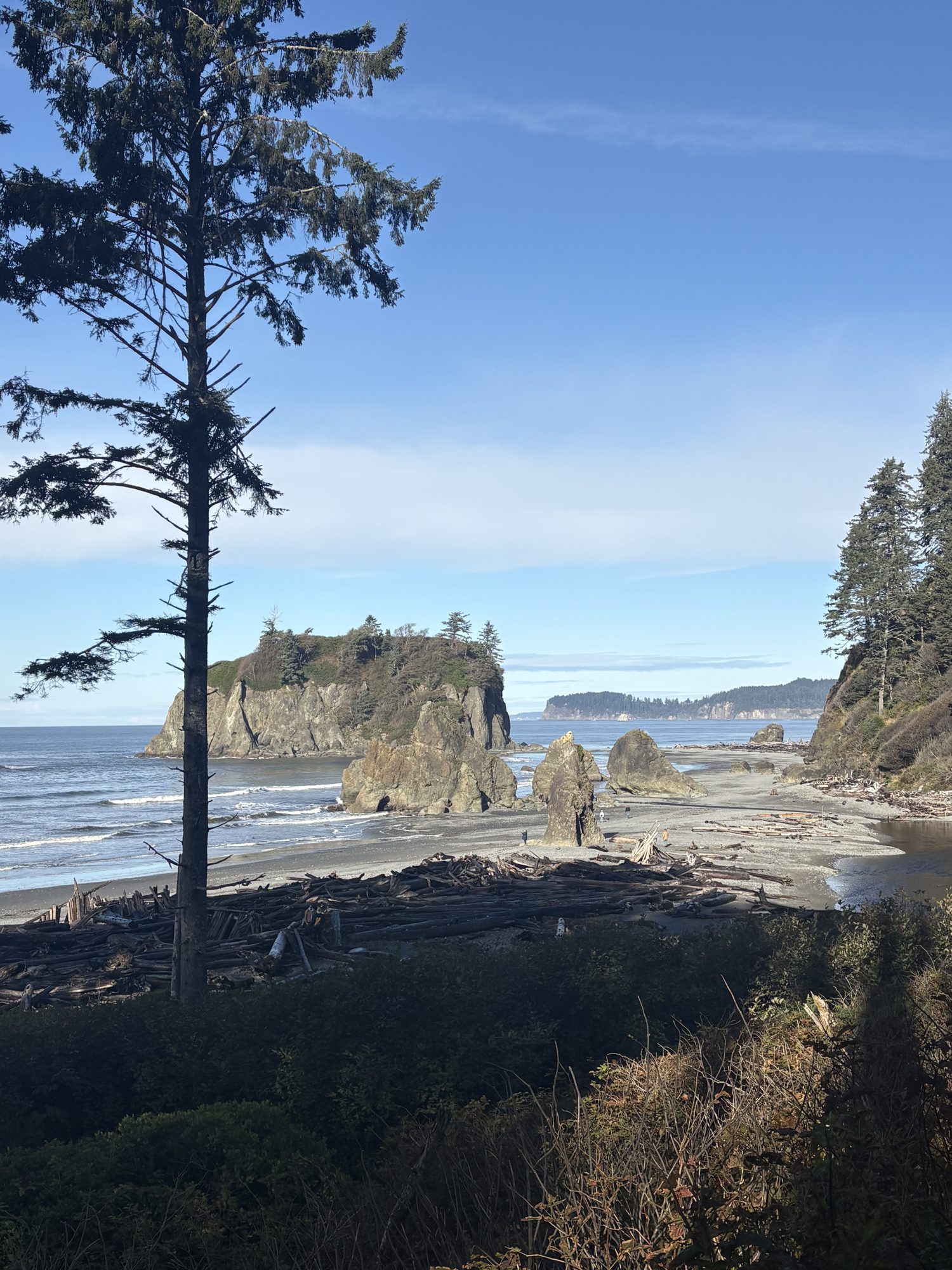
- Ruby Beach under a blue sky: sea stacks, a sea arch you can stand inside, and Cedar Creek running out past Abbey Island.
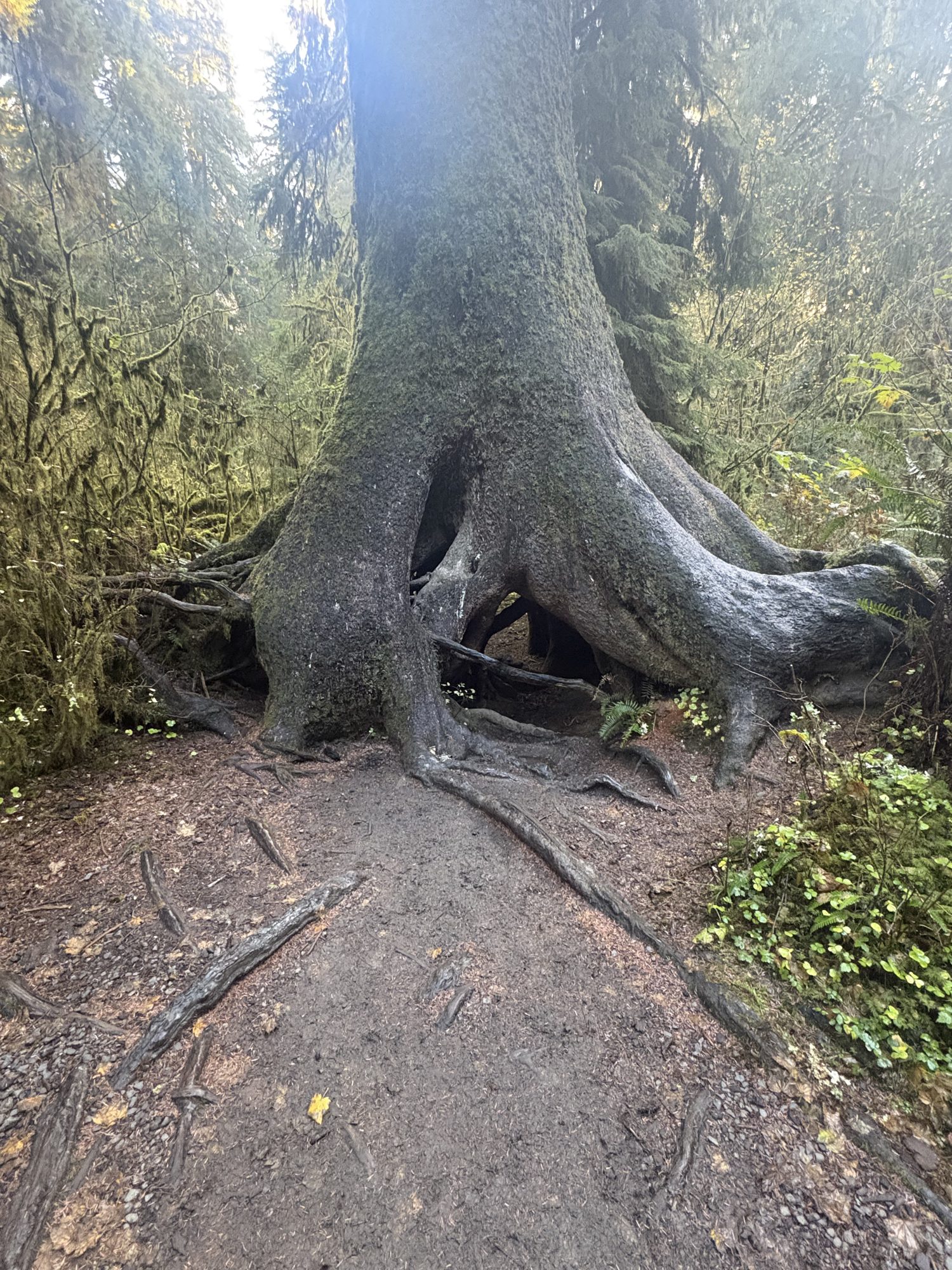
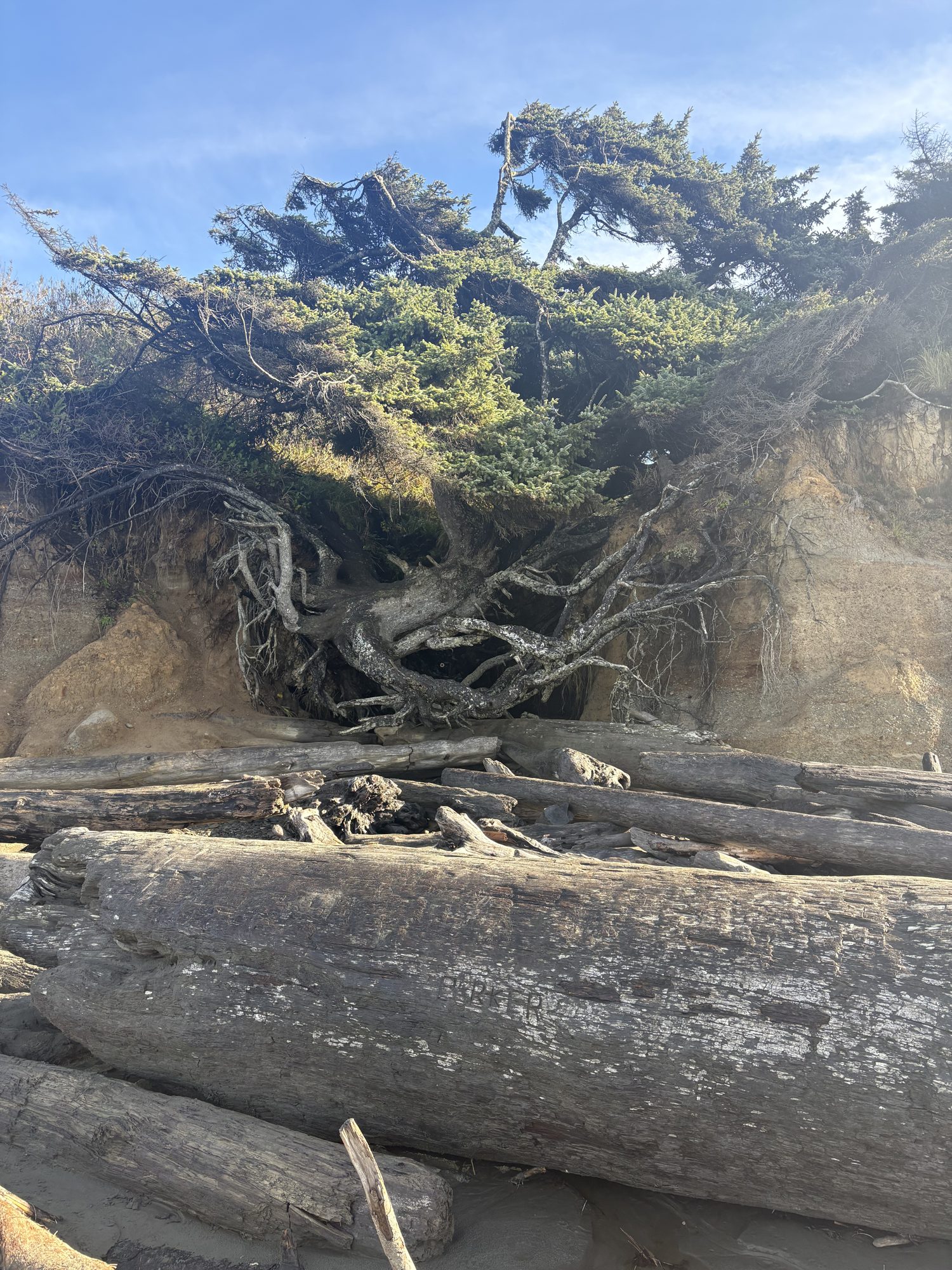
- The Kalaloch Tree of Life, a Sitka spruce still standing over the gap where the bluff has washed out from under its roots. Then the Kalaloch Lodge stamp, since the ranger station was closed for the season.
Lunch was the previous night’s leftover pizza, eaten somewhere south of Aberdeen. The car went back at 3:29 PM, with time to spare before the flight back out of Sea-Tac.
Afterwards
This was my first national park in Washington, and I fell for it on the very first day. The moody weather along the Peninsula turned out to be the best part: low cloud sitting on Lake Crescent, drizzle in the old growth, and grey light fading over Rialto Beach. Saturday’s blue sky at Ruby Beach was a bonus.
Trip Details
Duration: October 29-31, 2026 (2 nights)
Location: Olympic National Park, Washington
Route: Sea-Tac → Tacoma Narrows → Poulsbo → Port Angeles → Elwha → Lake Crescent → Sol Duc → Rialto Beach → Forks → Hoh → Ruby Beach → Kalaloch → Sea-Tac
Activities: Short day hikes, waterfalls, beaches, rainforest, scenic driving
Stayed: Quality Inn, Port Angeles · The Sol Duc Bear Inn, Forks
Passport stamps: Hoh Rain Forest Visitor Center, Kalaloch Lodge
Notes To Self
- Check the NPS conditions page the morning you leave, not the week before. Hurricane Ridge Road closes with the first real snow, and in late October that can happen with no warning.
- Olympic has no timed entry, but the park doesn’t take cash. Buy the pass online or bring a card.
- The coast-to-Sea-Tac drive is about 3 to 3.5 hours. Google is optimistic about I-5 near Tacoma on a Saturday. Plan backwards from the car return, not from the flight.
- The Hoh before 8 AM is empty, dark, and worth the alarm.
- Off-season stamps: when a ranger station is closed, the stamp has usually moved to the nearest lodge.